

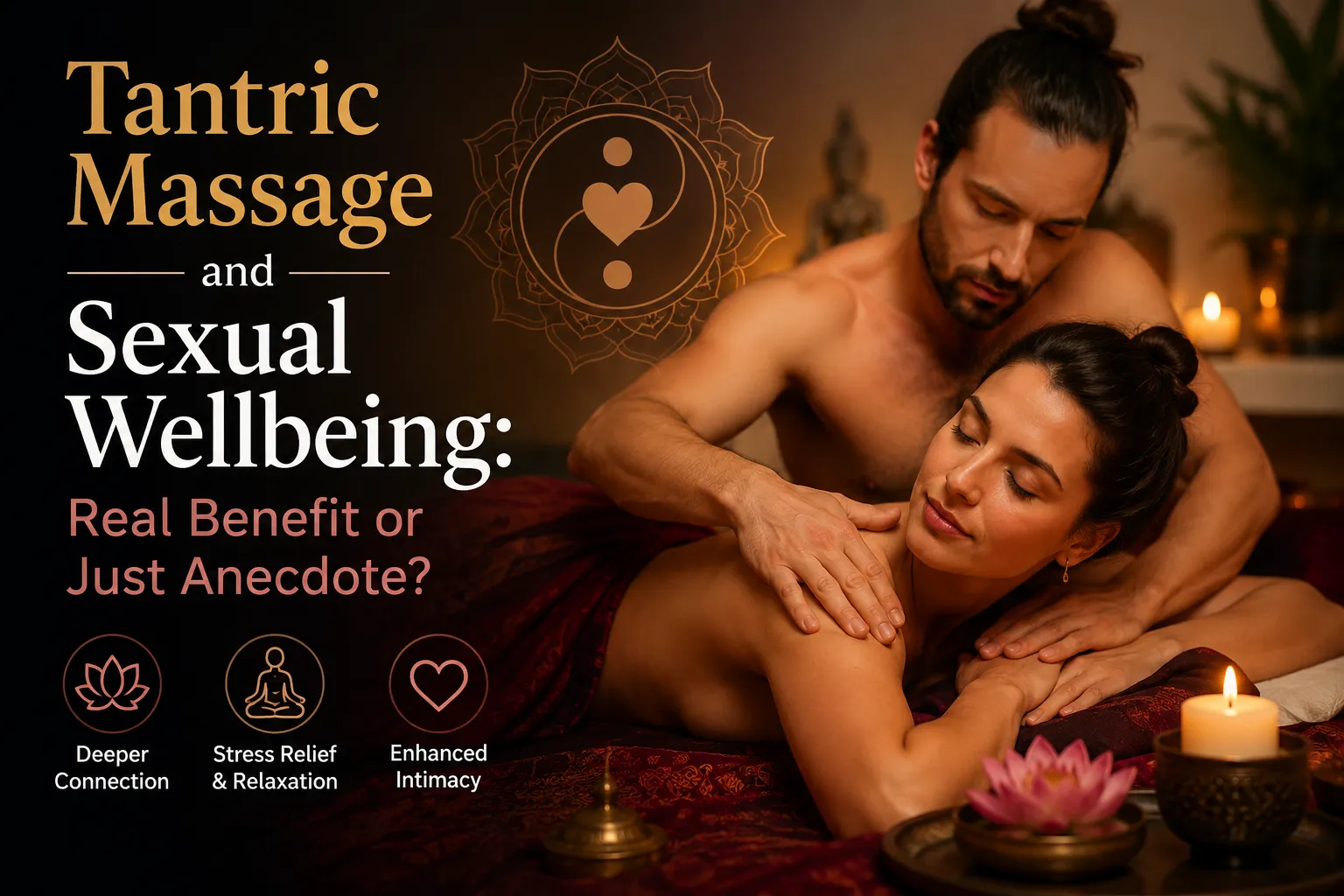
A Question People Are Finally Willing to Ask Out Loud
It used to be rare for anyone to openly discuss how stress, anxiety, or emotional disconnection affects intimacy. That’s changed. Conversations about performance pressure, body confidence, burnout, and difficulty relaxing during intimate moments are now part of mainstream wellness discussions — not whispered topics.
At the same time, practices that once sat on the fringe — meditation, breathwork, somatic therapy, nervous-system regulation — have moved into the wellness mainstream.
Put those two shifts together, and you get a question that comes up more and more: does tantric massage genuinely support sexual health, or is it mostly people convincing themselves something worked?
The honest answer sits between the two extremes.
“Sexual Health” Means More Than One Thing
Part of the confusion comes from a narrow definition. Sexual wellbeing isn’t just about physical performance — it’s also shaped by:
- relaxation and stress levels
- emotional safety with a partner
- body confidence
- nervous-system state
- communication
- self-awareness
- the ability to be present rather than distracted
Chronic stress — the kind common in fast-paced city life — affects all of these factors, often without any underlying medical cause. Someone can be in perfect physical health and still struggle with intimacy simply because their nervous system never fully downshifts out of “alert” mode.
This is part of why mindfulness-based practices have increasingly entered conversations about intimacy and connection.
What a Tantric Session Is Actually Built Around
Contrary to how it’s often portrayed, professional tantric massage isn’t oriented around performance at all. The emphasis tends to be on:
- breath awareness
- sensory mindfulness
- slow pacing
- body awareness
- emotional calm
- present-moment focus
This matters because many modern intimacy struggles aren’t physical in origin — they’re about being mentally elsewhere, carrying stress into the moment, or feeling too self-conscious to relax.
A full-body relaxation experience built around these principles won’t “fix” anything in a medical sense. But it can help someone reconnect with physical sensation in a way that feels less pressured — and that shift alone can matter.
So… Is There Actual Evidence?
Here’s where honesty matters most: there isn’t a substantial body of clinical research that studies tantric massage specifically as a treatment for sexual health concerns. Anyone making strong medical claims here is overstating things.
What does exist is a much broader evidence base connecting:
- stress reduction
- mindfulness
- nervous-system regulation
- emotional wellbeing
- relaxation practices
…to improved relationship satisfaction and general wellbeing. Researchers widely accept that chronic stress and anxiety can interfere with arousal, connection, and physical comfort.
So while “tantric massage” itself isn’t a studied medical intervention, several of its core ingredients — mindfulness, breath, relaxation, sensory awareness — overlap with practices that are linked to better stress regulation. That overlap is real, but it’s indirect, which is exactly why most reported benefits remain anecdotal rather than clinically proven.
Why “Anecdotal” Doesn’t Mean “Worthless”
The word “anecdotal” gets used almost dismissively, as if it means “fake.” It doesn’t. It simply means the evidence comes from personal experience rather than controlled studies.
And in matters of intimacy, subjective experience carries real weight. If someone genuinely feels:
- calmer
- less anxious
- more emotionally connected
- less self-conscious
- more physically present
…those internal shifts can absolutely change how they experience closeness — regardless of whether a clinical trial has measured it.
This is one reason people often describe tantric massage as emotionally restorative rather than purely physical. For many, it’s less about “enhancement” and more about reconnecting with a relaxed state that’s become unfamiliar.
The Nervous System Is Doing More Than You’d Think
One of the most important (and underrated) ideas in modern wellness is that the body simply doesn’t relax fully when it feels unsafe, rushed, or overstimulated.
Most people today live in a near-constant state of low-grade alertness — checking phones, managing to-do lists, anticipating the next demand. Even “downtime” often isn’t restful, because the mind stays active.
A slower, sensory-reduced environment can help some people:
- breathe more deeply
- feel more grounded in their body
- quiet mental chatter
- experience genuine calm
These shifts may indirectly support intimacy and connection — not because anything was “treated,” but because the nervous system finally got a chance to settle.
Emotional Safety Is the Missing Piece in Most Conversations
People rarely talk about how much emotional safety affects physical relaxation. If someone feels guarded, anxious, or self-conscious, their body often reflects that — regardless of the setting.
This is why professional tantric massage tends to emphasize:
- trust
- clear communication
- a calm, unhurried atmosphere
- consent at every step
- mindfulness and body awareness
The experience is built around relaxation and presence, not performance — and for some people, that emotional shift alone feels markedly different from a typical spa visit.
Where the Limits Are
A responsible take has to include what tantric massage can’t do. It is not:
- a treatment for sexual dysfunction
- a substitute for therapy or medical care
- guaranteed to improve intimacy
- right for everyone
- a clinically validated intervention
If someone is dealing with chronic pain, erectile dysfunction, trauma-related symptoms, severe anxiety, relationship conflict, or hormonal issues, the right step is a qualified healthcare or mental health professional — not a wellness session marketed as a cure.
Any practitioner promising guaranteed outcomes should be a red flag.
Why People Keep Seeking This Out Anyway
Despite the lack of formal research, interest keeps growing — and it’s worth asking why. In most cases, it’s not because people are chasing “more” sexually. It’s because they’re craving:
- emotional decompression
- a slower pace
- nervous-system calm
- body awareness
- a sense of reconnecting with themselves
That broader framing explains why tantric massage increasingly overlaps with wellness retreats, somatic therapy circles, and mindfulness culture — not just conversations about intimacy.
The Line Between Wellness and Medicine
This distinction is worth repeating because it’s so often blurred. Wellness-appropriate language includes things like stress reduction, relaxation, mindfulness, and body awareness. Medical claims — guaranteed healing, clinical effectiveness, permanent transformation — are not appropriate for a wellness service, and any provider using that language should be approached with caution.
Final Take
So, does tantric massage improve sexual health?
For some people, the relaxation, mindfulness, and nervous-system calm involved may indirectly support overall wellbeing and intimacy. But the honest answer is that most of these benefits remain personal and anecdotal rather than clinically proven.
It’s not a medical cure, and it shouldn’t replace healthcare. But in a world where stress and distraction shape so much of modern intimacy, an experience built around slowing down and reconnecting with the body may genuinely matter to a lot of people — not because of what it claims to fix, but because of what it gives people permission to feel: calm, present, and briefly unhurried.
FAQ
Does tantric massage improve sexual health?
Some people report benefits related to relaxation and emotional connection, but direct scientific evidence remains limited.
Is it medically proven?
No — most reported benefits are anecdotal and tied to broader relaxation and mindfulness effects rather than clinical studies.
Can stress really affect intimacy?
Yes. Chronic stress, anxiety, and nervous-system overload are well-documented factors that can affect emotional connection and physical comfort.
Why do people seek this out?
Most commonly for relaxation, mindfulness, body awareness, and a sense of slowing down — not purely for sexual reasons.
Should it replace medical treatment?
No. It should never be used as a substitute for professional healthcare or therapy.



Leave a Reply