

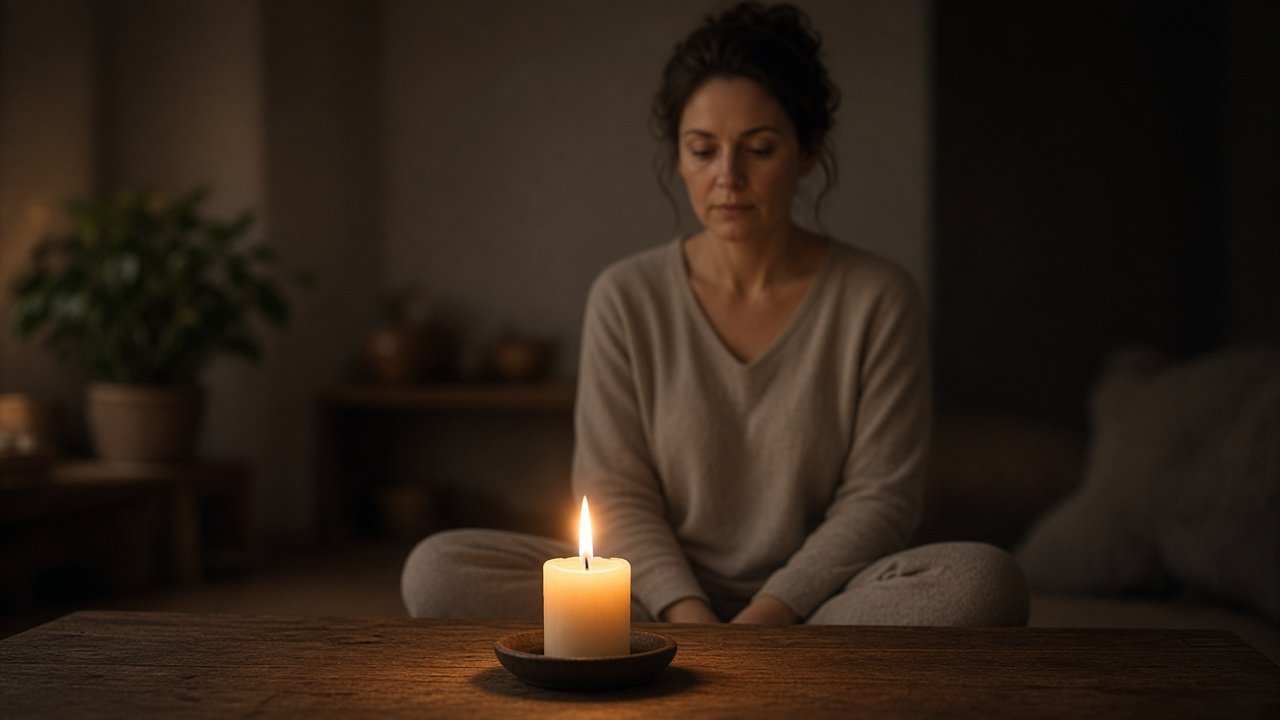
Almost everyone who sits down to meditate discovers the same thing within a minute or two: the mind has a mind of its own. Attention darts to a sound, a worry, a memory or a plan. Concentration, the ability to hold attention steadily on one thing, feels like a rare gift. Mindfulness, the ability to notice what is happening without getting lost in it, feels almost as elusive.
The question many people ask is whether the practices of Tantra Yoga can help. The honest answer is that they offer a rich toolkit for training attention, and that many students find them useful, while individual results vary and no practice guarantees a particular outcome. This article explains what Tantra Yoga offers for mindfulness and concentration, how its methods compare with secular approaches, and how to start in a realistic way.
Two skills, not one
It helps to separate two related abilities.
Concentration is the capacity to keep attention fixed on a chosen object, such as the breath, a sound or an image. It narrows the field.
Mindfulness is the capacity to notice experience as it arises, including distractions, with a stable and non-reactive attitude. It widens the field.
Traditional contemplative systems train both. Concentration gives stability, and mindfulness gives clarity. Tantric practice uses methods that touch both, which is part of why it is often described as a comprehensive path rather than a single technique.
What the tradition offers
Tantric traditions developed a very large repertoire of meditation methods. Reference works note that the tradition’s main focus is developing latent capacities through special meditation and ritual techniques transmitted from teacher to student. Several categories of method are relevant to attention training.
Breath-based methods
Classical hatha texts treat breath as the link between body and mind. When breath is steady, the mind tends to steady too. Practices that follow the breath at the nostrils or in the belly provide a continuous, always-available object for concentration. Gentle variations include counting breaths or noticing the pause between inhale and exhale.
Sound-based methods
Mantra, the repetition of a sacred sound, is central to many Tantric systems. A modern summary of the Kashmiri tradition describes mantra as reflexive speech, sound that traces its way back to the silence from which it arises. In secular terms, repeating a simple sound or phrase gives the mind something to hold and reduces the room for wandering. Listening practices, in which you follow sounds from their start to their fading, train a more open kind of attention.
Visualisation
Holding a detailed mental image steady is a demanding exercise in concentration. Researchers who study Tantric visual culture have approached these methods through the lens of cognitive science, treating images as tools for training perception and attention. A simple version is to picture a candle flame or a point of light and keep it stable.
Body-based methods
Tantric thought gives the body unusual importance. Scanning through the body, resting attention on a point in the belly or hands, or following the movement of sensation are all ways of training attention using a present-moment object. Because bodily sensation exists only now, it is a reliable anchor.
Open awareness
Beyond focused concentration, nondual Tantra encourages a wide, receptive awareness in which everything that arises is allowed to appear and pass. The Kashmiri doctrine of recognition holds that awareness always knows its own nature, and that practice is a matter of remembering rather than acquiring. For mindfulness, the practical message is that noticing a wandering mind is already an act of awareness.
What the evidence does and does not say
It is worth being careful here. Research on mindfulness and meditation in general has grown considerably, and many studies report benefits for attention and wellbeing, but the field also has methodological limits, and results vary between studies and individuals. Research specifically on Tantric yoga practice is much thinner than research on general mindfulness, and claims that Tantra Yoga reliably improves concentration should be treated cautiously.
What can be said fairly is this: the underlying methods, such as breath awareness, sound meditation, body scanning and focused attention, are common to many contemplative traditions and have been widely practised and studied. If you practise them regularly, it is reasonable to expect that your ability to notice and return attention will improve, as with any skill that is trained. It is not reasonable to expect dramatic or guaranteed change, or to treat a practice as a cure for an attention disorder. If you have concerns about attention, memory or focus, speak with a health professional.
A realistic training plan
Skills improve with regular, graded practice. The following plan builds from short sessions to longer ones. Adapt it as needed.
Weeks 1 and 2: five minutes daily. Sit comfortably. Follow the breath at the nostrils. When attention wanders, notice and return. Aim not for perfect focus but for repeated returning.
Weeks 3 and 4: ten minutes daily. Begin with five minutes on the breath, then spend five minutes on sound listening. Notice the difference between narrow and open attention.
Weeks 5 and 6: add body awareness. After the breath, scan slowly through the body for several minutes. Choose the strongest sensation and rest there.
Weeks 7 and 8: add a simple mantra or visualisation. Silently repeat a single word or phrase in time with the breath, or hold the image of a small light at the centre of the chest. If either feels uncomfortable, return to the breath.
Beyond: Extend sessions to fifteen or twenty minutes if you wish, and continue to vary the methods.
Practise at roughly the same time each day. Many people find mornings easiest, but any consistent time works.
Posture and environment
Concentration is easier when the body is comfortable and alert. A few practical points:
- Sit with the spine upright but not rigid, either on a chair with feet flat or on a cushion.
- Let the hands rest on the thighs or lap.
- Keep the eyes closed or softly lowered.
- Choose a quiet place and silence notifications.
- Avoid practising when very sleepy or immediately after a heavy meal.
If sitting is uncomfortable, practise lying down, though you may need to guard against falling asleep, or try walking meditation.
Common obstacles and responses
Restlessness. Try a few minutes of gentle movement beforehand, or practise after a walk. Include restlessness itself as an object of attention: where is it felt?
Drowsiness. Open the eyes slightly, sit more upright, practise at a different time or splash your face with cool water.
Intrusive thoughts. Label them lightly (“planning,” “remembering”) and return. Do not fight them.
Boredom. Notice boredom as an experience. It often contains restlessness, judgement and a wish for something else. If it persists, vary the method.
Self-criticism. Remember that noticing distraction is the practice. A session full of wandering and returning is a good session.
Concentration in daily life
The point of training is not only to improve in formal sessions. It is to bring a steadier quality of attention into ordinary tasks.
- Single-tasking. Choose one task and give it full attention for a set period. Silence the phone and close unrelated windows.
- Short resets. Between tasks, take three slow breaths and feel your feet before beginning the next.
- Mindful listening. In meetings and conversations, practise returning to the speaker whenever attention drifts.
- Sensory anchoring. When you notice yourself scattered, feel the contact of your hands with the keyboard or desk.
These small habits strengthen the same muscle as formal meditation, and they make it available when you need it.
How Tantric methods compare with secular mindfulness
Many readers will notice that the practices above overlap heavily with secular mindfulness programmes. That overlap is genuine, and it would be misleading to suggest that Tantra has a monopoly on attention training. Differences are mostly in context and emphasis.
Tantric approaches tend to give more weight to the body and to energy-based imagery, to sound and mantra, and to a philosophical frame in which awareness and experience are not separate. Secular programmes tend to be more standardised, shorter and explicitly non-religious. Some people prefer the structure and research profile of secular courses. Others find the richer vocabulary and variety of Tantric methods more engaging. There is no need to choose permanently; many practitioners draw on both.
Finding guidance
Attention training is simple but not always easy, and a teacher can help with posture, pacing and troubleshooting. A holistic wellness course that includes mindfulness, breath and body awareness is a sensible way to get structured support. The Academy of Modern Tantra describes its offering as taught by experienced teachers who provide personal guidance, with a flexible format. As with any provider, review the course details, ask about teacher training and be wary of promises of dramatic results.
Exercises to try this week
The following exercises isolate different aspects of attention. Each takes five to ten minutes.
Counting breaths. Count each exhale from one to ten, then start again. If you lose count, start at one without criticism. This makes it easy to see exactly when attention has wandered, which gives immediate feedback.
The candle gaze. Place a candle at eye level about an arm’s length away, in a safe spot, and rest your gaze softly on the flame for two to three minutes. Then close your eyes and see whether the afterimage remains. This is a traditional-style concentration exercise adapted for everyday use. Skip it if you have any condition affecting your eyes and consult a professional if in doubt.
Sound follow. Strike a bell or play a single note and follow the sound until it disappears. Then notice what is left. Repeat several times.
Body anchor. Choose a single point, such as the centre of the palms, and hold attention there for three minutes. Notice sensations that arise: warmth, pulsing, tingling.
Open monitoring. For the last few minutes of a session, let go of any anchor and simply notice whatever arises: sounds, sensations, thoughts. Name nothing. Just watch.
Tracking progress without obsessing
It helps to have a few honest indicators. Consider noting, after each session, how many times you noticed that you had wandered, and how quickly you noticed. Noticing more often is not a sign of worsening focus. It is a sign of growing awareness. Over weeks, you may see that the gap between wandering and noticing shortens. That is a modest but real marker of progress.
You might also observe daily life: do you find it easier to read for longer stretches, to stay with a conversation, or to resist a reflexive glance at your phone? These are informal measures, but they reflect the kind of change practice aims for.
Frequently asked questions
How long before I notice a difference? There is no fixed answer. Some people notice small changes within a couple of weeks of daily practice, such as catching distraction sooner. Others take longer. Consistency matters more than session length.
Do I need to sit cross-legged? No. Any comfortable, alert posture works, including a chair.
Is it normal for my mind to feel busier when I start? Yes. Sitting quietly often makes mental activity more visible. The mind has not become busier; you are simply noticing it.
Can I practise with music? Instrumental music can help some people relax, but for training attention it is usually better to start in quiet or with natural sound.
What if I have ADHD or a similar condition? Many people with attention difficulties find short, active practices such as walking meditation and brief sessions more manageable. Speak with your clinician, and treat practice as a complement to, not a replacement for, professional care.
The role of rest and sleep
Attention depends on basic physical conditions. Poor sleep, dehydration, hunger and constant stimulation all undermine concentration, however well you practise. If your focus is poor, check the basics first. Adequate rest, regular meals and breaks from screens will often help more than any technique. Meditation is an addition to a sensible lifestyle, not a replacement for one.
The takeaway
Can Tantra Yoga improve mindfulness and concentration? It offers methods, such as breath awareness, sound meditation, visualisation and body-based attention, that train exactly those skills, and many students find them valuable. The honest caveat is that results depend on regular practice and vary between people, and that the research specific to Tantric yoga is limited.
If you want to find out for yourself, the experiment is cheap. Give five minutes a day to following the breath for two weeks, note what you observe, and then add one new method. Judge by your own experience, and keep what helps.










Leave a Reply