
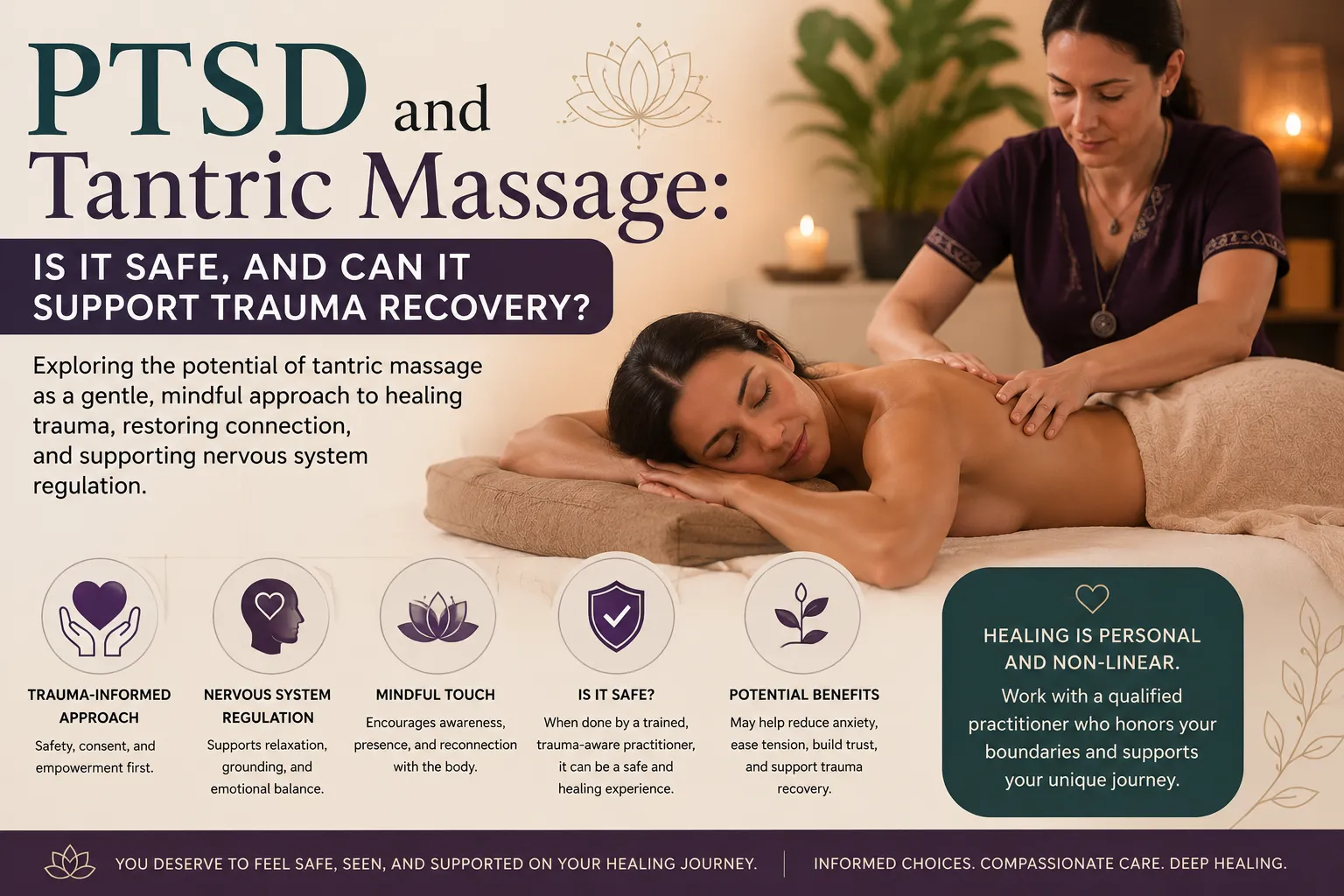
PTSD and Touch: Why This Question Deserves Care
If you have PTSD, asking whether tantric massage is safe is not a small question.
For some people, gentle bodywork can feel calming. For others, touch, silence, closed rooms, scent, music, or loss of control can activate fear, memories, panic, dissociation, or emotional overwhelm. That does not mean your body is “wrong.” It means your nervous system may be protecting you after trauma.
PTSD can involve anxiety, sleep problems, flashbacks, concentration difficulties, and strong physical reactions to reminders of trauma. Evidence-based PTSD care usually includes trauma-focused psychological therapies such as trauma-focused CBT or EMDR, and professional assessment is especially important when symptoms affect daily life.
So the honest answer is this:
Tantric massage may feel supportive for some people with PTSD, but it should not be treated as trauma therapy or a replacement for licensed mental health treatment.
The safer question is not only, “Can tantric massage help me?”
It is, “Is this therapist trauma-informed, ethical, consent-led, and able to work safely with my nervous system?”
Can Tantric Massage Help With Trauma Processing?
Tantric massage should not be described as a cure for PTSD.
Trauma processing is clinical work. It is usually done with trained mental health professionals using structured approaches such as trauma-focused CBT or EMDR, which are recommended in PTSD guidance.
However, a carefully delivered, trauma-aware tantric healing massage may support some people indirectly by helping them experience:
- safer body awareness
- slower breathing
- gentle grounding
- emotional calm
- present-moment connection
- relaxation after long-term stress
- a more compassionate relationship with the body
That is very different from “processing trauma.”
A massage therapist should never claim to treat PTSD unless they are also properly qualified to provide psychological trauma care. The ethical role of tantric massage is supportive wellness, not clinical trauma treatment.
When Tantric Massage May Not Be Safe
Tantric massage may not be suitable if your PTSD symptoms are currently intense, unstable, or easily triggered.
It may be better to delay bodywork if you are experiencing:
- frequent flashbacks
- strong dissociation
- panic attacks
- recent trauma
- self-harm urges
- severe sleep disruption
- fear of being touched
- difficulty saying no
- difficulty staying present
- emotional overwhelm in enclosed spaces
In these cases, it is wiser to speak first with a GP, therapist, trauma counsellor, or mental health professional. NHS and NICE guidance both emphasise proper PTSD assessment and access to evidence-based support.
A good wellness practitioner should respect this. They should never pressure you to book before you feel ready.
What Makes a Tantric Massage Therapist Trauma-Informed?
A trauma-informed therapist understands that the body can carry fear, memory, and protective responses.
They do not assume relaxation is automatic.
They do not rush trust.
They do not treat consent as a one-time formality.
When searching for certified tantric massage therapists in London, look for someone who can clearly explain:
- their training background
- their consent process
- what the session includes
- what the session does not include
- how you can pause or stop
- how they handle emotional reactions
- whether they have trauma-awareness training
- how they protect privacy and boundaries
An authentic tantric massage experience should feel calm, transparent, and respectful before the session even begins.
Consent Is the Most Important Safety Signal
For someone with PTSD, consent must be active, ongoing, and easy to withdraw.
A safe practitioner should say clearly:
- you can pause at any time
- you can stop the session at any time
- you can ask questions
- you can change your mind
- your boundaries will be respected
- nothing will be forced
- silence does not mean consent
This matters because trauma can make it difficult for some people to speak up in the moment. A trauma-informed therapist understands this and creates simple ways to communicate comfort, discomfort, or the need to stop.
The best tantric studio in London for someone with PTSD is not simply the most luxurious one. It is the one where boundaries are treated as sacred.
How to Prepare Before Booking
Before booking tantric massage in London, consider asking:
- Have you worked with clients who have PTSD or trauma histories?
- Do you offer a consultation before the session?
- Can the session be adapted for emotional safety?
- Can I keep some clothing on if needed?
- Can I pause or stop at any point?
- Can we avoid certain areas or techniques?
- Do you use grounding or breath awareness?
- What happens if I feel overwhelmed?
- Is the room private but not intimidating?
- Do you provide aftercare or quiet time afterward?
A professional therapist will not be offended by these questions. They will welcome them.
What a Safer First Session Might Look Like
For a first session, less is often better.
A trauma-aware tantric massage session may begin with:
- a calm conversation
- clear boundaries
- gentle breathing
- simple grounding
- slow pacing
- permission-based touch
- regular check-ins
- no rushed transitions
- time afterward to settle
The goal should not be intensity.
The goal should be safety.
For someone with PTSD, a full body relaxation experience should never mean losing control. It should mean feeling more present, more respected, and more able to remain connected to yourself.
Red Flags to Avoid
Avoid any therapist or studio that:
- makes healing guarantees
- dismisses PTSD concerns
- refuses to explain boundaries
- uses vague or suggestive language
- pressures you to book quickly
- avoids consent discussions
- discourages questions
- claims massage can cure trauma
- makes you feel embarrassed for asking about safety
Ethical wellness care is never built on pressure.
Can Tantric Massage Be Part of a Wider Healing Plan?
Possibly, but only carefully.
For some people, massage, breathwork, yoga, meditation, or gentle body-awareness practices can sit alongside therapy as supportive wellbeing tools. But for PTSD, clinical trauma treatment should remain guided by qualified professionals. PTSD recovery often requires structured psychological support, and organisations such as NICE, NHS, and Mind describe trauma-focused therapies and EMDR as recognised treatment routes.
A safe way to think about tantric massage is: Therapy helps process trauma. Trauma-informed bodywork may help some people feel safer in their body between deeper therapeutic work.
That distinction protects both the client and the practitioner.
Final Thoughts
If you have PTSD, tantric massage may be safe only when the therapist is ethical, trauma-aware, consent-led, and willing to adapt the experience around your comfort.
It should never be sold as a cure.
It should never replace therapy.
It should never ask you to override your instincts.
The right experience should feel calm, respectful, transparent, and fully within your control.
When searching for tantric massage London or a luxury spa experience with trauma sensitivity, choose the practitioner who talks most clearly about safety, not the one who makes the biggest promises.
For trauma survivors, trust is not an extra feature.
It is the foundation of the entire experience.
FAQ
Is tantric massage safe for PTSD?
It may be safe for some people, but only with a trauma-informed, ethical, consent-led practitioner. If your PTSD symptoms are intense or unstable, speak with a mental health professional first.
Can tantric massage cure PTSD?
No. Tantric massage should not be described as a cure for PTSD. Evidence-based PTSD care usually involves trauma-focused psychological therapies such as trauma-focused CBT or EMDR.
Can tantric massage help me feel calmer?
Some people may find gentle, mindful bodywork calming, but responses vary. For PTSD, safety, consent, pacing, and professional boundaries are essential.
What should I ask before booking?
Ask about training, consent, boundaries, trauma awareness, session structure, privacy, stopping the session, and how the therapist responds if you feel overwhelmed.
Should I tell the therapist I have PTSD?
You do not need to share details of your trauma, but it can help to say you need a slow, consent-based, trauma-sensitive approach.





Leave a Reply