


Mayfair is often associated with polished hotels, discreet addresses and carefully managed personal service. Those qualities also shape what many adults expect from a private body-to-body massage appointment in the area. The appeal is not simply closeness. It is the combination of a calm setting, clear communication, thoughtful pacing and enough privacy to step away from the noise of Central London.
A professional experience should never depend on guesswork. Before an appointment begins, the client and therapist should understand the chosen format, the agreed boundaries, the duration and any practical preparation. Consent remains active throughout, and either person can pause or stop the session. When these foundations are in place, intimacy can feel composed and reassuring rather than rushed or uncertain.
This guide explains what makes a Mayfair appointment distinctive, how body-to-body massage differs from more conventional formats, what to confirm before booking and how to protect a quiet period afterwards. It is written for adults considering a private experience and does not promise medical, emotional or relationship outcomes.
What defines a body-to-body massage experience?
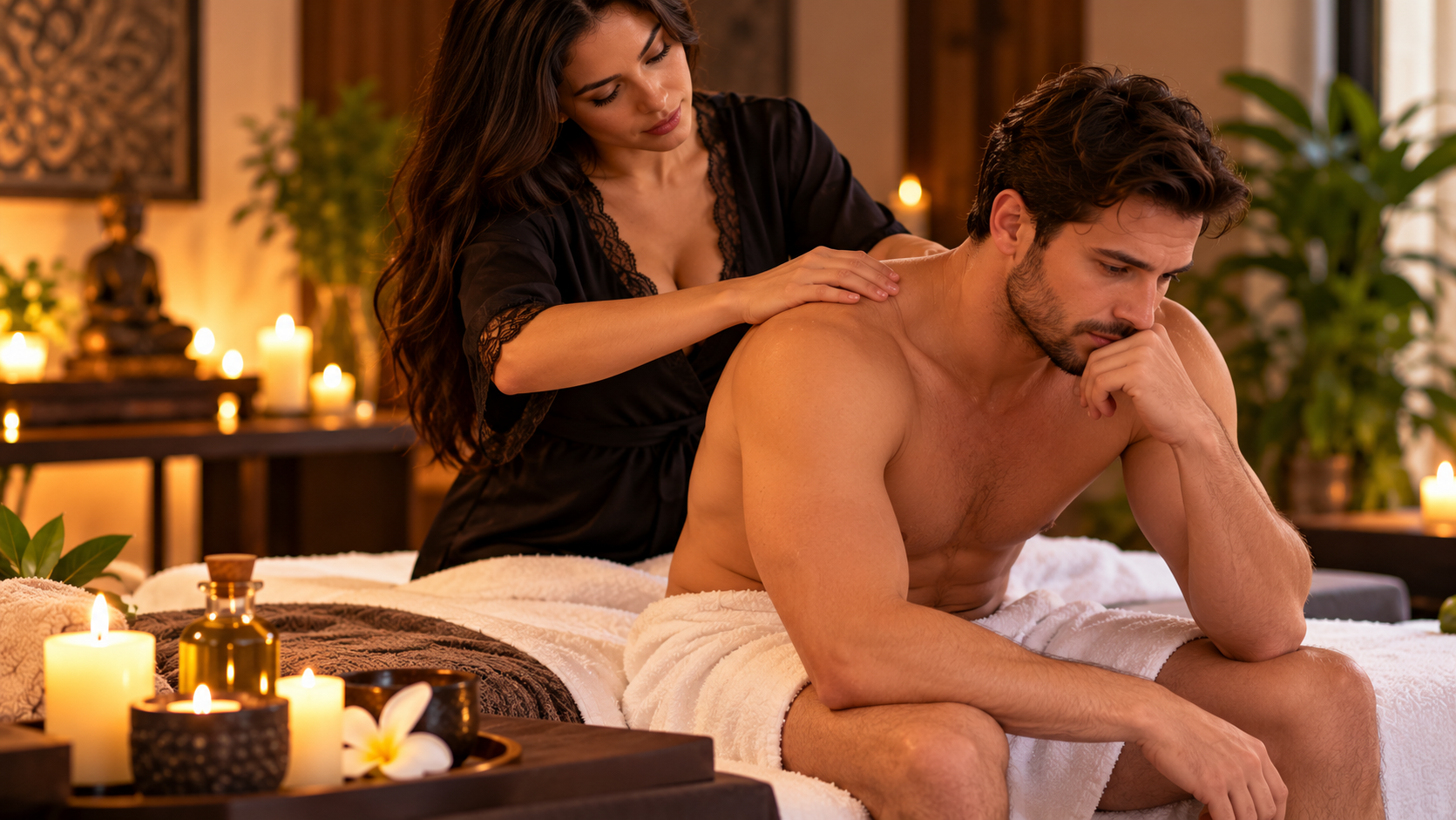
Body-to-body massage is a close-contact massage format in which the therapist may use broader areas of the body, alongside established hand and forearm movements, as part of an agreed session. Exact techniques vary by provider and therapist, so the service description should be read carefully rather than assumed.
The defining feature is proximity, but proximity alone does not create a good appointment. A professional session also depends on controlled movement, suitable massage products, a prepared environment and continuing attention to comfort. The therapist should explain the broad structure beforehand and make it easy for the client to ask questions without embarrassment.
Someone researching Body 2 Body massage in London should therefore compare more than images or promotional wording. The useful questions concern who provides the session, where it takes place, what is included, what is excluded, how consent is managed and how the final price is calculated.
This format should not be confused with a promise of unspecified extras. A reputable description sets a clear scope. If a website, receptionist or therapist avoids direct questions about boundaries, that uncertainty is a reason not to proceed.
Why Mayfair suits a private, carefully paced appointment
Mayfair sits between several of Central London’s busiest destinations, yet many of its side streets feel notably removed from the pace of Oxford Street and Piccadilly. That contrast is useful for someone who wants an appointment to feel separate from work, shopping, meetings or tourism.
Green Park, Bond Street and Oxford Circus provide different approaches to the wider neighbourhood. The most sensible station depends on the exact address, current service conditions and walking preferences. Travellers should use the Transport for London journey planner on the day rather than relying on a fixed journey time.
Mayfair also contains hotels, private treatment spaces, restaurants and small garden squares within a relatively compact area. That can make it easier to build a calm transition into the day. A client may arrive early, take a short walk, have water in a quiet café and reach the appointment without running directly from a crowded platform.
The neighbourhood’s reputation for discretion can be attractive, but the postcode does not guarantee service quality. A refined entrance or expensive room cannot replace accurate information, professional conduct, hygiene or respectful communication. The provider still needs to earn trust through the details of the booking.
Intimacy begins with clarity, not surprise
An intimate atmosphere is often described through lighting, music, fragrance and warmth. These elements matter, but they are secondary to clarity. The client should know what kind of appointment has been booked before entering the room.
A useful pre-session conversation confirms the service format, duration, areas to avoid, relevant sensitivities and any preferences that fall within the therapist’s stated scope. It should also explain practical matters such as shower access, draping or clothing expectations, the product being used and how the client can request a change in pressure or pace.
Consent is specific and reversible. Agreement to one massage format does not mean automatic agreement to every possible technique. A physical response is not consent, silence is not consent, and a previous appointment does not establish consent for a future one. The therapist and client both retain the right to change or end the session.
This directness does not make an encounter less personal. In practice, it removes the mental effort of trying to interpret hints. When expectations are shared, both people can remain attentive to the experience that has actually been agreed.
What happens before the massage begins?
The opening minutes establish the tone for everything that follows. They should feel organised, unhurried and respectful, even when the client has visited the provider before.
Arrival and verification
At arrival, confirm that the therapist, address, duration and price match the booking. If a receptionist provided the details, the therapist should still have enough information to identify the correct appointment without asking the client to renegotiate it in the room.
Never proceed if the address changes unexpectedly, the quoted fee becomes unclear or the person present does not match the confirmed profile. Contact the provider through the original channel and resolve the discrepancy first.
Consultation and boundaries
The consultation should be brief but meaningful. Mention injuries, recent procedures, allergies, skin sensitivities, pregnancy or any condition that could affect positioning or the suitability of massage. Seek medical advice in advance when there is doubt. A massage provider is not a substitute for a qualified clinician.
The therapist should invite the client to identify areas that should not be worked on and preferences concerning pressure, temperature, conversation and music. The therapist may also state personal boundaries. A professional agreement respects both sides.
Hygiene and preparation
A clean room, fresh linen, hand hygiene and appropriately stored products are basic expectations. Shower guidance should be communicated before the appointment where possible, especially if the location has limited facilities.
Clients should arrive sober and reasonably hydrated. Heavy meals immediately beforehand may be uncomfortable. Jewellery and valuables are best kept to a minimum, while essential medication and contact details should remain accessible.
How the session can unfold without becoming graphic
The exact sequence differs between therapists, but a well-managed appointment usually moves from orientation into gradual, broader massage work and then towards a calmer close. The important distinction is that the pace follows communication, not a fixed theatrical script.
At the beginning, the therapist may use conventional massage movements to establish pressure and help the client become familiar with the room and rhythm. Broader contact can then be introduced within the agreed format. The use of oil or gel should support smooth, controlled movement without creating avoidable discomfort.
Check-ins do not need to interrupt the atmosphere. A short question about pressure, temperature or comfort may be enough. Clients can also use clear phrases such as “slower, please”, “avoid that area”, “I need a pause” or “I would like to stop”. These are complete instructions and do not require justification.
The final minutes should not feel abrupt. A gradual reduction in pace gives the client time to reorient, sit up carefully and prepare to leave. Water, privacy for dressing and clear directions out of the building are small details that influence the overall impression.
The difference between closeness and pressure
Closeness can feel calming when it is chosen, understood and easy to regulate. The same physical proximity can feel uncomfortable when a client is uncertain about what happens next or believes that changing their mind would be awkward.
Pressure can appear in several forms. It may be an attempt to upsell a different service in the room, a suggestion that boundaries are negotiable, an unexpected change in clothing expectations or language that makes refusal seem impolite. None of these belongs in a professional appointment.
A client should not be expected to perform enthusiasm. They may enjoy quiet, request less conversation, change position slowly or decide that a particular technique is not suitable. A therapist should likewise be able to state and maintain boundaries without being challenged.
The best experiences often feel effortless because the important decisions were made explicitly. Ease is the result of good preparation, not the absence of standards.
Choosing between incall and hotel outcall in Mayfair
Mayfair supports both provider-based appointments and visits to suitable hotel accommodation, but the two formats create different practical responsibilities. Neither is automatically more private or more premium.
| Consideration | Incall appointment | Hotel outcall appointment |
|---|---|---|
| Environment | Prepared and managed by the provider | Depends on the room, hotel rules and available space |
| Travel | Client travels to the confirmed address | Therapist travels to the client |
| Equipment | Usually arranged at the location | Must be confirmed before arrival |
| Access | Provider gives arrival instructions | Guest must understand visitor and reception procedures |
| Post-session transition | Client travels afterwards | Client can remain in the room if hotel access was properly arranged |
| Pricing | Confirm duration and total fee | Confirm duration, travel charges and waiting arrangements |
Incall may suit a first-time client who prefers a space already organised for the service. It also removes the need to interpret hotel visitor rules. The exact address, entry instructions and facilities should still be confirmed before travelling.
Hotel outcall may suit a visitor who wants to avoid another journey after a long day. The guest must first check the hotel’s visitor policy and should never ask a therapist to bypass reception or security. The room needs enough safe movement space, a comfortable temperature and a realistic plan for linens and massage products.
For either format, confirm the cancellation policy and what happens if travel disruption causes a delay. Mayfair traffic and Central London events can change journey conditions quickly.
How to evaluate adult wellness services responsibly
The category of adult wellness in London includes businesses with very different standards, descriptions and booking practices. A polished website can help with initial research, but responsible selection requires information that can be checked.
Start with the service page. It should explain the format in plain language and distinguish it from other massage options. Then inspect therapist profiles, location information, prices, frequently asked questions, contact methods and terms. If these pages contradict one another, request clarification in writing.
Useful signs include:
- A named service with a defined scope rather than vague promises.
- Current therapist profiles that identify a general area without exposing a private residential address.
- A full price and duration provided before the appointment.
- Straightforward answers about hygiene, preparation and boundaries.
- A booking channel that can confirm changes or cancellations.
- No guarantee of medical, psychological or relationship results.
Reviews can reveal patterns in punctuality, communication and cleanliness, but they should not be treated as proof that every future appointment will be identical. Read a range of comments and compare them with the provider’s current policies.
Choosing a therapist for fit rather than fantasy
Images may create the first impression, but profile substance is more useful than appearance alone. A client needs to know the therapist’s location, offered formats, communication style and any practical requirements relevant to the booking.
Consider how much guidance you want. A first-time client may prefer someone whose profile and booking team explain the process clearly. A returning client may be comparing pace, setting or appointment format. Neither decision should depend on assumptions drawn from a photograph.
When looking for Tantric Massage in London, ask whether the therapist’s actual approach matches the service you intend to book. “Tantric”, “body-to-body”, “sensual” and “Nuru” are sometimes used differently across businesses. The provider should explain its own definitions rather than expecting the client to guess.
Availability can change, including for profiles associated with Mayfair. Confirm the chosen therapist directly before setting out. If a substitute is proposed, you are free to accept, ask questions, select another time or decline.
Questions worth asking before you pay a deposit
A concise written enquiry can prevent most avoidable misunderstandings. It also creates a record of the agreed details if the booking is later changed.
Ask the provider to confirm:
- The therapist’s name and general Mayfair location.
- Whether the appointment is incall or outcall.
- The exact service format and its boundaries.
- The session duration and whether consultation time is included.
- The total price, deposit, accepted payment method and any travel fee.
- Hygiene or shower preparation requirements.
- The cancellation, delay and substitution policy.
- Arrival instructions and the correct contact if access is difficult.
Be cautious when someone claims to represent the most popular Tantric Massage parlour in London but cannot provide these basic facts. Popularity is not a substitute for accountable booking, consistent information or professional conduct.
Keep screenshots or confirmation messages until the appointment is complete. Do not send unnecessary identity documents, financial information or intimate personal material. If verification is legitimately required, ask why, how it will be stored and whether a less intrusive option is available.
Building a calm Mayfair schedule around the appointment
An appointment can be well organised yet still feel rushed if it is placed between too many commitments. Protecting the time around it is one of the easiest ways to improve the experience.
Allow a generous arrival buffer. Check the route shortly before leaving, particularly if using Green Park, Bond Street or Oxford Circus. Avoid scheduling a demanding call while walking to the location. If you arrive early, choose a public place where you can wait comfortably rather than appearing at a private address without notice.
Afterwards, leave enough time to dress, drink water and return to your next destination at a normal pace. Green Park can offer a simple outdoor pause when weather, daylight and personal safety make it suitable. Mount Street Gardens is another local option, although opening conditions and events can change.
A short schedule is often more restorative than an ambitious one:
- Arrive in Mayfair with 20 to 30 minutes of spare time.
- Confirm access only through the agreed contact channel.
- Attend the session without a meeting immediately afterwards.
- Plan a quiet meal, walk or return to the hotel.
- Avoid making important decisions until you feel fully reoriented.
These steps do not guarantee a particular emotional effect. They simply reduce predictable sources of pressure.
Where mindfulness and gentle movement may fit
Some adults connect close-contact massage with broader interests in attention, breathing or embodied awareness. These practices may influence how a person prepares, but they should not be added to a session without discussion.
Tantra Yoga is a separate practice with varied traditions and teaching approaches. A massage therapist should not be assumed to be a yoga teacher, spiritual guide or healthcare professional. If breath awareness, meditation or another practice is offered, ask what it involves, whether participation is optional and what training supports the instruction.
A simple personal approach is enough for many clients. Notice whether the breath feels comfortable, avoid forcing a particular count and speak when something needs to change. Present-moment attention is useful only when it supports choice. It should never be used to encourage someone to tolerate discomfort or ignore a boundary.
What a premium setting should actually provide
In Mayfair, “premium” can become shorthand for décor and postcode. Those details may contribute to ambience, but practical standards determine whether the setting supports a professional appointment.
Someone comparing the best tantric studio in London should look for consistency between the promise and the operational details. Does the provider answer direct questions? Are prices and durations clear? Do the therapist profile and service page agree? Is the client given realistic arrival guidance? Can both parties maintain boundaries without negotiation?
A premium space should also provide privacy from interruption, clean surfaces, fresh linens, a comfortable temperature and enough room for the agreed service. Luxury is most credible when it reduces uncertainty through accurate information, punctual communication and respectful conduct.
Frequently asked questions
These answers address the practical issues adults commonly need to resolve before arranging a body-to-body massage in Mayfair.
Is body-to-body massage the same at every London provider?
No. Terminology, techniques, clothing expectations, products and boundaries can differ. Read the specific service page and obtain written confirmation of the format before booking. Do not rely on a previous experience elsewhere as the definition for a new provider.
Is Mayfair convenient for visitors staying in Central London?
It can be. Green Park, Bond Street and Oxford Circus serve different edges of the area, while many hotels are nearby. Convenience depends on the exact address, current transport conditions and whether the appointment is incall or outcall. Confirm access before travelling.
Should I choose incall or hotel outcall?
Choose incall if you prefer a provider-prepared environment and clear on-site facilities. Consider hotel outcall if avoiding further travel matters and your accommodation permits visitors. Confirm equipment, travel fees, reception access and room suitability before deciding.
How do I know whether a provider is professional?
Look for consistent service descriptions, identifiable therapist profiles, clear prices, reliable contact methods, hygiene guidance, stated boundaries and realistic claims. Ask direct questions and do not proceed when answers remain vague or contradictory.
Can body-to-body massage treat a health condition?
It should not be presented as medical treatment. Speak with an appropriately qualified healthcare professional about pain, injury, mental health concerns or another condition. Tell the therapist about relevant issues that may affect safe positioning or product use.
What should I confirm on the day?
Reconfirm the therapist, time, general location, appointment format, total price and arrival procedure. Check live transport conditions and notify the agreed contact promptly if a delay is likely. Do not accept unexplained last-minute changes.
A memorable encounter should still feel grounded
Body-to-body massage in Mayfair can feel distinctive because it combines close-contact massage with one of London’s most discreet central neighbourhoods. Yet the strongest experience is not created by postcode, mystery or exaggerated promises. It comes from a suitable therapist, an accurately described service, a clean private setting and an agreement that remains clear from arrival to departure.
Take time to compare the format, ask practical questions and protect a quiet window around the booking. Choose incall or outcall according to the setting that genuinely suits you, not according to assumptions about which option appears more exclusive. Most importantly, treat consent and boundaries as part of the quality of the experience.
To review the current service description, therapist pathways and booking options, visit Tantric Massage London’s body-to-body massage page and confirm the latest Mayfair details directly before arranging an appointment.









Leave a Reply