
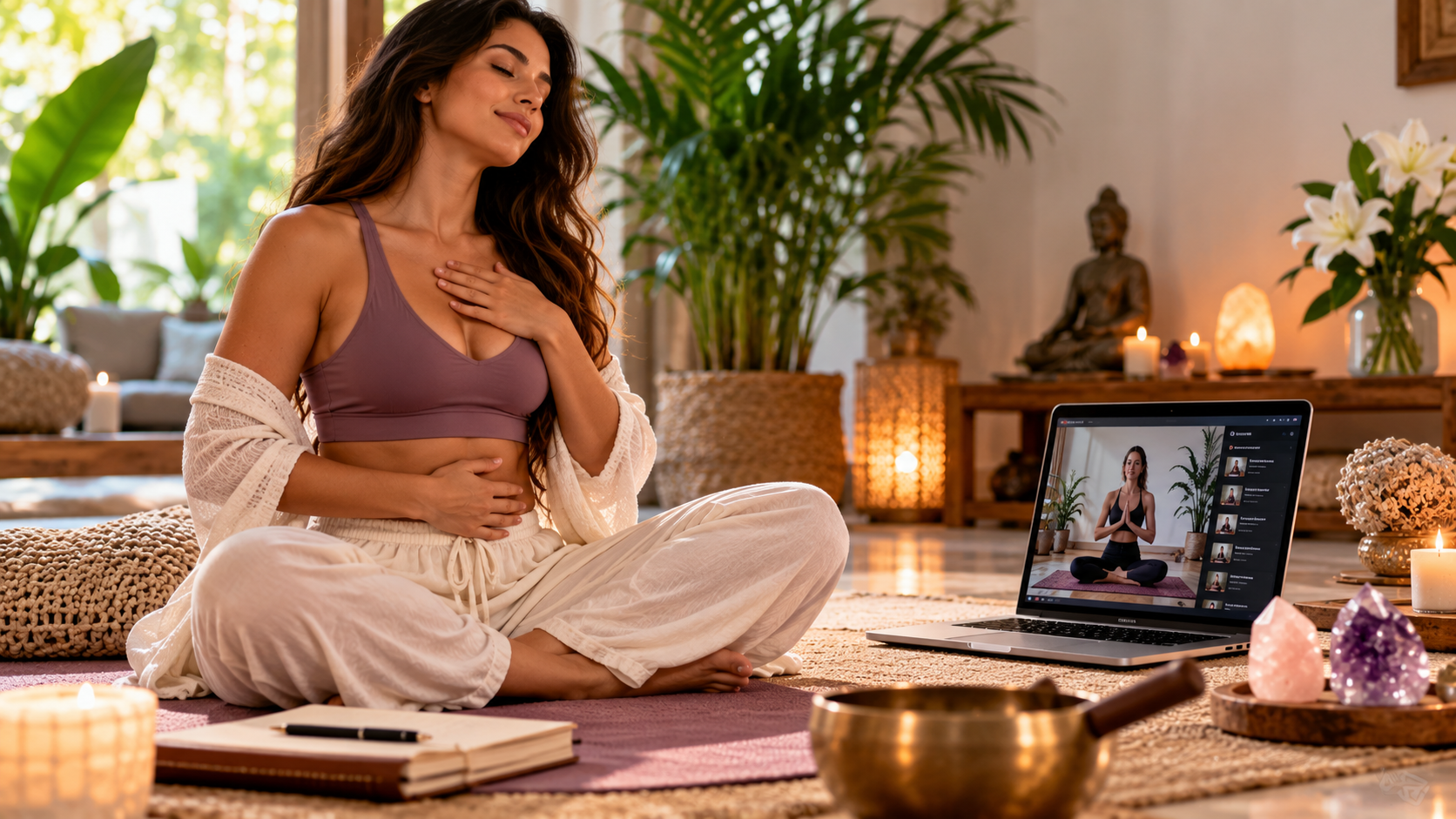
Wellness is often discussed as though it begins with a better plan: think differently, set a goal and follow a routine. Yet many people notice strain in the body before they can explain it in words. The jaw tightens. Breathing becomes shallow. The shoulders rise. Attention narrows. A body-based approach starts with those signals and asks what they can teach us.
That is one reason adults are becoming curious about the meeting point between modern Tantra, somatic healing and holistic wellbeing. An online tantric course can provide an accessible introduction to this territory by combining education with guided, reflective practice. The aim is not to promise a cure. It is to help learners become more attentive to sensation, breath, movement, choice and the relationship between physical experience and emotional wellbeing.
Somatic Healing Starts With Lived Experience
The word somatic comes from the Greek word soma, meaning body. In a wellness context, a somatic approach pays attention to experience as it is felt: warmth, pressure, tension, ease, posture, movement, breath and other internal or external sensations. Instead of relying only on analysis, it brings the body into the conversation.
This focus overlaps with established mind-and-body practices. The US National Center for Complementary and Integrative Health describes mind-and-body practices as approaches that engage interactions between the brain and body. Its examples include meditation, relaxation techniques, massage, tai chi and yoga. The UK National Health Service also explains that mindfulness can involve noticing breathing and sensations in parts of the body. These sources support a careful point: attention to bodily experience can be part of a broader wellness practice, although individual methods and evidence should not be treated as interchangeable.
Somatic therapy is a clinical term in some settings, while somatic education and body-awareness practices may be taught for personal development. A responsible course should make that distinction clear. Learning to notice a clenched stomach or a restless impulse is not the same as receiving diagnosis or treatment from a licensed mental-health professional.
Where Tantra Meets the Mind Body Connection
Popular culture often reduces Tantra to sexuality. Contemporary tantric wellness training can be broader, drawing attention to presence, breathing, embodied awareness, relational patterns, communication and intentional practice. The body is not treated as an object to perfect, but as a source of information that can be approached with curiosity and respect.
This creates a practical bridge to somatic learning. A learner might observe how their breathing changes during uncertainty, how quickly they override discomfort or how posture shifts when they feel confident. The purpose is not to label every sensation. It is to develop enough body awareness to pause, notice and choose a response with greater care.
What You May Explore in an Online Course
Course content varies, so the curriculum and teaching standards matter more than the label. A well-framed online holistic wellness course may introduce several connected areas:
- Present-moment attention. Short practices can help learners notice physical sensations, thoughts and emotions without immediately trying to change them.
- Breath awareness. Rather than forcing a dramatic breathing pattern, beginners may learn to observe pace, depth and comfort, then use gentle practices within their own limits.
- Movement and posture. Slow, deliberate movement can reveal habitual holding patterns and differences between effort, stability and ease.
- Boundaries and consent. Ethical tantric education should emphasise choice, communication, the right to pause and respect for personal limits. This applies in solo practice as well as partnered learning.
- Reflection and integration. Journalling or guided questions can connect a practice with daily life, such as recognising tension before a difficult conversation or making space to settle after a demanding day.
These areas can support holistic healing in the broad sense of caring for the whole person. They should still be described with proportion. A course can offer concepts, exercises and a learning community; it cannot guarantee a particular emotional or health outcome.
Why the Online Format Can Work Well
Embodied learning may sound as if it must happen in a studio, but an online format has distinct advantages. Learners can practise in familiar surroundings, revisit explanations and build repetition into ordinary routines. Someone in London, Florida or elsewhere can access the same core material without travel shaping every decision.
Privacy may also help beginners concentrate. There is less pressure to perform in front of a room, and learners can arrange a calm space, keep a notebook nearby and stop when needed. Recorded material can support self-paced review, while live sessions can create opportunities to ask questions and clarify technique.
The trade-off is that online study requires personal responsibility. Instructions should explain contraindications, options and when to stop. Learners should not push through pain, dizziness, panic or overwhelming emotion to complete an exercise. A credible online tantric course makes choice and pacing part of the teaching rather than treating intensity as progress.
A Simple Body Awareness Practice
A short, low-intensity check-in can show what somatic attention feels like. This is an awareness exercise, not somatic therapy:
- Orient. Look around and name three neutral objects you can see.
- Find support. Notice where the chair, floor or bed is holding your weight.
- Observe the breath. Follow two or three natural breaths without making them deeper.
- Name one sensation. Choose a simple description such as warm, cool, tight, soft, moving or still.
- Notice choice. Ask whether you want to continue, adjust your position or finish.
The final step matters. Body awareness is not only about detecting sensation; it is also about recognising agency. If even a gentle exercise feels distressing, stop and seek suitable support. Anyone living with trauma symptoms or a mental or physical health condition should discuss appropriate care with a qualified professional.
How to Evaluate a Holistic Wellness Course
Course descriptions can use expansive language, so examine the practical details before enrolling. Look for a clear curriculum, transparent delivery format and an explanation of who the course is designed for. Check the educator’s relevant training and how questions or difficulties are handled.
Ethics are equally important. The programme should discuss consent, boundaries, privacy and respectful participation. It should explain whether exercises are solo, partnered or optional, and no learner should be pressured into touch, disclosure or a practice that conflicts with their limits.
Finally, check the scope. Personal-development education is not automatically a professional qualification, and a certificate does not by itself authorise someone to diagnose or treat health conditions. Learners interested in professional practice should verify accreditation, insurance and legal requirements in their own country or state before offering services.
Beginning With AOMT
AOMT presents online learning in Somatic Bioenergetic Tantra for personal development and professional use, with modules intended to be taken in sequence. Adults considering this route can first read AOMT’s overview of somatic healing and then explore the wider course pathways through the Academy of Modern Tantra website. Reviewing the curriculum, delivery method, support and intended learning outcomes will help you decide whether the approach fits your goals.
For some learners, the value of an online tantric course lies in gaining a new vocabulary for experiences they already recognise: a breath held during conflict, a sense of ease after movement or the moment a boundary becomes clear. That vocabulary can make holistic wellness more concrete. It turns “mind body connection” from an abstract phrase into a practice of noticing, choosing and integrating what you learn into daily life.
A Grounded First Step
Somatic and tantric education is most useful when approached with openness and discernment. Begin slowly. Favour clear teaching over dramatic claims. Treat comfort, consent and choice as essential skills, not optional extras. Most importantly, understand what the course can and cannot provide.
Used in that way, online study can offer a thoughtful introduction to body awareness, reflective practice and holistic wellness. It may help learners become more curious about how they inhabit their bodies and how that awareness shapes emotional wellbeing, communication and everyday decisions.
Suggested author bio: AOMT offers learning pathways in Tantra, somatic bioenergetic practice and holistic wellness for adult personal development and professional interests. Explore its courses and educational resources at academyofmoderntantra.co.uk.







Leave a Reply