


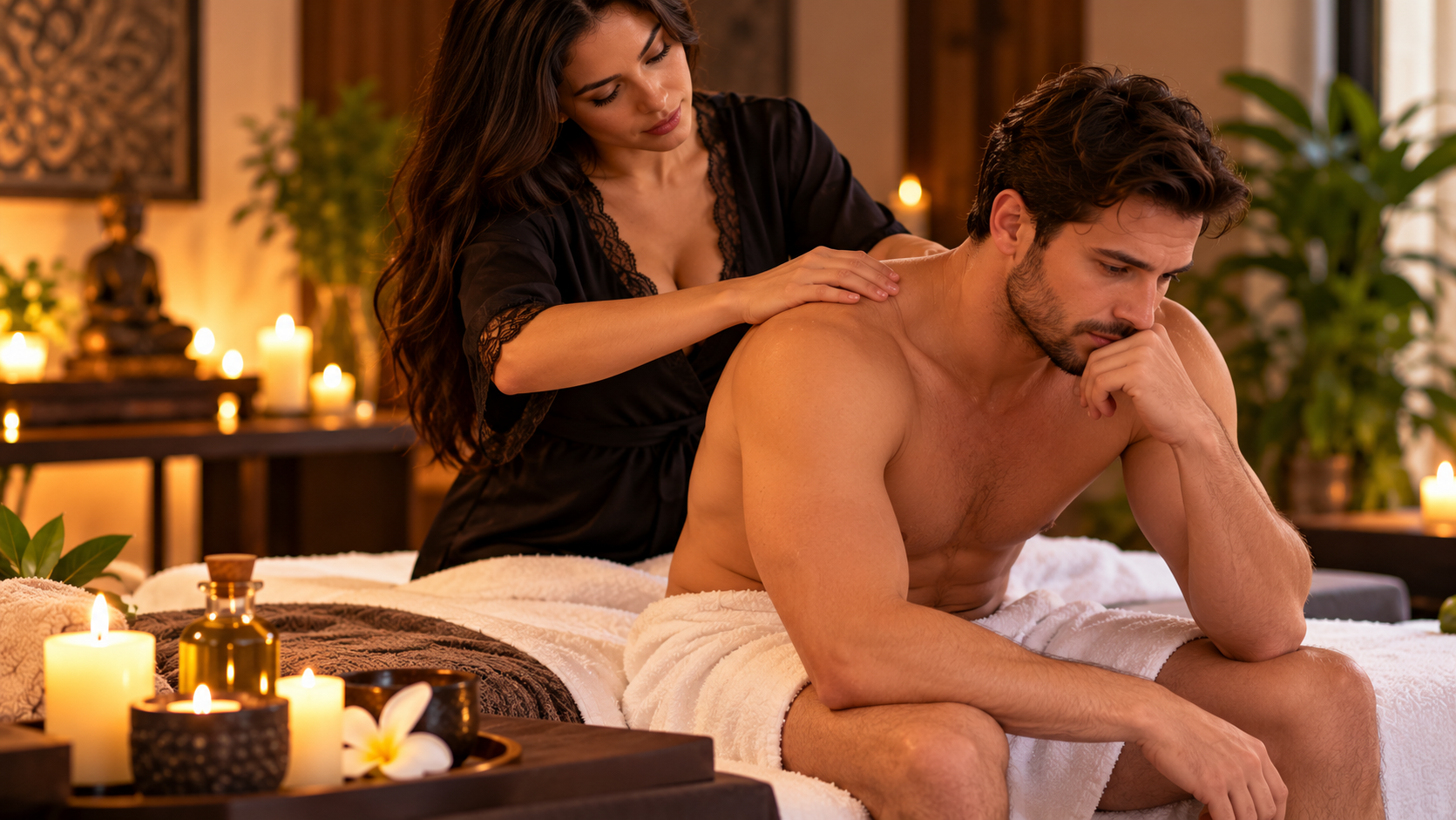
Some experiences appear daring when imagined from a distance, yet feel unexpectedly ordinary once they take place in a calm, respectful setting. Erotic massage can create that contrast. The word erotic carries cultural baggage, private associations and sometimes embarrassment. The actual decision, however, may be much less dramatic: an adult considers a professional service, asks practical questions, agrees clear boundaries and chooses whether to proceed.
That does not make every service suitable or every hesitation irrelevant. Feeling curious is not consent, advertising is not proof of professionalism, and a polished room cannot replace transparent communication. The more useful question is not whether an experience is socially conventional. It is whether it is freely chosen, clearly defined and consistent with the person’s own limits.
For adults researching Tantric Massage in London, this distinction matters. London offers anonymity, variety and convenient booking routes, but those advantages can also make vague promises appear more credible than they are. A natural-feeling experience begins before the appointment, with enough information to make an unhurried decision.
In brief: An erotic massage may feel surprisingly natural when an adult has made an informed choice, understands the agreed scope, retains bodily autonomy, receives respectful communication and can pause or stop without pressure. The feeling is personal, not guaranteed. Professionalism depends on clarity, consent, privacy and boundaries rather than on how adventurous the service sounds.
Why a taboo can feel larger than the experience itself
A taboo is a social boundary. It tells people which subjects are acceptable to discuss openly, which should remain private and which may attract judgement. That boundary can shape anticipation long before anyone considers a real appointment.
Erotic wellbeing sits at the intersection of several subjects British culture has often handled awkwardly: the body, pleasure, ageing, vulnerability, paid personal services and the wish to receive attention. A person may be comfortable with each idea privately yet reluctant to put them together in a sentence. The discomfort can come from imagined judgement rather than from the experience being wrong for them.
This difference is easy to miss. Someone may interpret embarrassment as evidence that they should not be curious. Another person may treat nervous excitement as proof that they ought to proceed. Neither conclusion is reliable. Emotions provide information, but they do not make the decision on their own.
A better approach is to slow the choice down. What specifically feels uncomfortable? Is it the service, the uncertainty, the fear of being recognised, the prospect of setting boundaries, or the label attached to it? Once the concern is named, it can be assessed rather than merely felt.
Natural does not mean inevitable, universal or consequence-free
Calling an experience natural can sound reassuring, but it can also become a subtle form of pressure. There is no single response that every adult is supposed to have. One person may feel at ease. Another may decide that the same service is not for them. Both responses can be sensible.
Naturalness, in this context, is not a biological claim. It describes a sense of personal coherence: the choice matches the person’s values, the situation makes sense, the communication feels respectful and nothing important has to be ignored. It should never be used to dismiss doubt, override a boundary or suggest that reluctance is a problem to fix.
The same applies to bodily or emotional responses during an appointment. Calm, nervousness, pleasure, distraction, self-consciousness or no strong reaction at all can occur. None proves that the person is unusually liberated, repressed, healed or transformed. A professional experience leaves room for variation without turning the client’s response into a scorecard.
The five-part normality test
The most useful way to examine a private adult experience is to look beyond its label. Five conditions help distinguish a choice that can feel grounded from one built on uncertainty, pressure or wishful thinking.
1. The decision is informed rather than impulsive
An informed choice begins with plain facts. The client should know the appointment format, duration, full price, location type, therapist identity or profile, cancellation terms and the general scope of the service before committing. Any important limits should be disclosed just as clearly as the inclusions.
This information turns an abstract fantasy into a decision that can be evaluated. It also makes comparison possible. A dramatic description may attract attention, but practical transparency is what allows trust to begin.
Adults sometimes feel compelled to book quickly because they fear losing courage. That is not a good reason for a provider to create urgency. If curiosity disappears after a night’s sleep, the pause has done useful work. If it remains, the person can continue with a clearer head.
2. The scope is clear before the appointment
Ambiguity may sound seductive in advertising, yet it is a poor foundation for professional service. A client should not have to guess what a term means, hope that a boundary will be understood or discover essential conditions only after arrival.
Clear scope does not require graphic detail. It requires enough neutral information to understand the service format, clothing expectations if relevant, areas that are excluded, products that may be used and how preferences will be discussed. Questions should receive direct answers without teasing, evasion or pressure.
This is especially important when someone compares a provider described online as the most popular Tantric Massage parlour in London. Popularity language does not establish fit. The more dependable evidence lies in how clearly the provider explains privacy, hygiene, consent, booking terms and the agreed limits of an appointment.
3. Bodily autonomy remains with the client
Paying for time does not transfer control of the client’s body to the provider. Agreement to one service does not imply agreement to every variation of it. Consent should be specific enough to guide the appointment and flexible enough to change as the client receives new information or notices discomfort.
The NHS describes valid consent in healthcare as voluntary and informed, with the person able to make the decision. An erotic massage is not healthcare, but the underlying principles of choice and understanding remain useful. A professional should make it straightforward to ask for an adjustment, decline an element, pause or end the appointment.
Autonomy also includes the freedom not to explain. “Please avoid that area”, “I would prefer less pressure” and “I want to stop” are complete instructions. A client does not owe a personal history in exchange for having a boundary respected.
4. Respect matters more than performance
Some people worry that they must behave in a particular way to justify the booking. They may think they should appear confident, relaxed or visibly responsive. That turns personal attention into a performance and can make an otherwise comfortable setting feel artificial.
A respectful appointment does not demand a reaction. The therapist should respond to clear feedback, maintain the agreed professional role and avoid judging appearance, experience or emotion. The client, in turn, must respect the therapist’s stated boundaries. Consent and dignity are reciprocal even though the roles are different.
This is one reason attentive communication matters more than theatrical atmosphere. Music, scent and lighting may shape the room, but they cannot compensate for dismissive language, unexplained changes or a reluctance to answer reasonable questions.
5. Stopping remains a real option
The right to stop is meaningful only when using it does not trigger argument, ridicule or bargaining. A person should be able to end the appointment because they feel uncomfortable, because the experience is not what they expected or simply because they have changed their mind.
This freedom should exist in practice as well as in theory. The client needs access to their belongings, a clear way to communicate and enough awareness to make decisions. Arriving severely intoxicated or using substances to suppress nerves undermines that capacity and should never be treated as a preparation strategy.
When stopping is genuinely possible, choosing to continue can feel more natural. The person is not trapped by politeness, payment or the fear of disappointing someone. They remain an active participant in the decision.
Privacy and secrecy are not the same thing
Private choices do not need to become public declarations. An adult may reasonably prefer discreet communication, a neutral booking record and an appointment location that does not expose personal information unnecessarily. Privacy protects control over who knows what.
Secrecy has a different quality. It may involve deception, fear, a breach of an existing agreement or a provider insisting that ordinary questions should not be asked. The line between the two depends on context, but the distinction is worth examining before booking.
A useful privacy check asks four questions:
- What personal data will the provider collect, and why?
- How will the booking appear in messages or payment records?
- Who will know the appointment location and therapist details?
- Is discretion being offered professionally, or used to discourage verification?
People in relationships may also need to consider agreements with their partner. There is no universal rule for what every couple should permit. There is, however, a meaningful difference between choosing personal privacy within an understood relationship and acting in a way that knowingly breaks a shared boundary.
Why London can make the decision easier and harder
London gives adults unusual freedom to explore private interests without those interests defining their wider identity. A person can move between work, travel, culture and personal appointments in the same afternoon. Central locations and a large provider market can reduce the sense that one decision will become public knowledge.
The city can also make poor choices easier to disguise. Attractive websites, temporary profiles, multiple contact channels and unfamiliar postcodes can create the appearance of abundance without making quality easier to judge. A convenient location near Paddington, Marylebone or Kensington is useful only after the service itself has been verified.
London timing matters too. Booking between meetings, immediately after a long journey or before a social commitment may leave little room to think, arrive calmly or process how the experience felt. Convenience should reduce friction, not remove reflection.
Someone comparing the best tantric studio in London for their needs should therefore look beyond postcode and presentation. A better shortlist is built from current therapist information, direct answers, transparent prices, realistic travel time, hygiene practices and the provider’s willingness to respect a clear “no”.
Turning curiosity into a sound decision
Curiosity becomes safer when it is translated into questions. The goal is not to interrogate a provider or request an elaborate guarantee. It is to remove the uncertainties that would materially affect consent, comfort or practical planning.
Before paying a deposit or travelling, confirm:
- whether the appointment is incall or outcall;
- the precise area or postcode, shared at the appropriate booking stage;
- the therapist currently available, rather than relying on an old profile;
- the duration and complete price, including any deposit;
- the service scope and important exclusions;
- the products used and whether allergies or sensitivities can be accommodated;
- shower, towel, hygiene and room arrangements where relevant;
- how to request changes, pause or stop;
- cancellation, lateness and refund terms.
The answers should be consistent across the website, messages and final confirmation. A small discrepancy can be clarified. Several shifting details, unexplained price changes or pressure to pay immediately are reasons to step back.
The Tantric Massage London FAQ can help first-time readers identify general questions, but live details should still be confirmed for the specific appointment. Therapist schedules, locations and formats can change.
What a professional environment changes
The word erotic can lead people to imagine that professionalism and warmth are opposites. In reality, structure often makes personal attention easier to receive. Clear roles reduce the need to interpret every gesture. Agreed boundaries reduce self-monitoring. Hygiene and privacy routines allow the client to focus on the present rather than wondering what has been overlooked.
The current UK occupational benchmark for body massage expects prior consultation, informed agreement, protected privacy, hygienic practice, comfortable positioning and appropriate changes when a client needs them. Erotic massage is not identical to a conventional massage treatment, and professional titles should not be borrowed inaccurately. Still, these standards provide a useful benchmark for the quality of process a careful client can expect.
The professional frame should be visible in ordinary details:
- messages are clear and courteous;
- the therapist profile is current and not misleading;
- the room and materials appear clean;
- privacy is protected without isolating the client from choice;
- the agreed scope is not changed without discussion;
- feedback is welcomed without demanding conversation;
- the appointment ends within the agreed format and time.
Readers who want to understand the brand’s adult-only service format can review the erotic massage information page before making an enquiry. The page is a starting point, not a substitute for confirming the exact booking.
Where contemplative practice fits, and where it does not
Some adults approach body awareness through movement, breath or contemplative practice before they ever consider massage. Tantra Yoga can be part of that wider personal interest, but sharing the word tantra does not make every massage provider a yoga teacher, spiritual guide, counsellor or health professional.
It helps to keep claims proportionate. A massage appointment may offer focused personal time and a different context for noticing sensation. It should not be presented as a cure for shame, trauma, anxiety, sexual difficulty or relationship conflict. Those concerns may require a GP, sexual-health clinician, counsellor or registered psychosexual therapist, depending on their nature.
Spiritual language should also remain optional. If concepts such as energy or ritual resonate with a client, they can inform personal meaning. If they do not, the person should not be told that discomfort reflects resistance or failure. No belief system should be used to weaken a boundary.
Preparing without turning the appointment into a test
Preparation should make the decision easier to inhabit, not create a standard the client must meet. There is no need to manufacture confidence or predict an outcome. A short practical routine is enough.
On the day, allow more travel time than the map suggests, especially when crossing Central London at peak hours. Avoid arriving under the influence of alcohol or drugs. Follow any sensible hygiene guidance supplied by the provider, wear comfortable clothing and keep the booking confirmation accessible.
Before entering, review three points privately: what you have agreed to, what remains uncertain and what words you will use if you want a change. Simple phrases work well:
- “Please explain that before we continue.”
- “I would like to keep the original scope.”
- “Can we pause for a moment?”
- “Please change the pressure or pace.”
- “I am ending the appointment now.”
These are not signs of difficulty. They are evidence that the client remains involved in the experience. A provider who reacts poorly to calm, reasonable communication is providing important information about the environment.
After the experience, use observation rather than judgement
The period after an appointment can reveal more than the intensity of the moment. Instead of asking whether the experience was daring enough or whether the “right” response occurred, consider whether the five conditions remained intact.
Did the reality match the description? Were boundaries treated as normal? Could preferences be expressed without awkward negotiation? Did the therapist remain professional? Was privacy handled as promised? Would you make the same choice again with the benefit of what you now know?
Positive answers may explain why something labelled taboo felt surprisingly straightforward. Negative answers should not be romanticised as part of the adventure. Record any important discrepancy while details are fresh, retain relevant messages and contact the provider if a practical issue needs resolution.
Frequently asked questions
These questions address the concerns adults often have before deciding whether a private massage service suits them. They are general guidance, not a description or guarantee of a particular appointment.
Is it normal to feel curious and embarrassed at the same time?
Yes. Curiosity and embarrassment can coexist because they respond to different things. Curiosity may concern the experience itself, while embarrassment may concern social judgement or unfamiliarity. Neither feeling obliges you to book. Identify the source of each, gather clear information and decide without urgency.
Does feeling natural mean the experience is right for everyone?
No. “Natural” describes an individual sense of comfort and coherence, not a universal standard. Another adult may prefer a different service or no service at all. A responsible provider should respect both choices and never suggest that hesitation proves a personal problem.
How can a first-time client reduce uncertainty?
Confirm the therapist, format, location area, duration, price, scope, exclusions, hygiene arrangements and cancellation terms in advance. Keep the final details in writing. Use the provider’s contact route for questions rather than relying on assumptions drawn from promotional wording.
Can consent be changed after the appointment begins?
Yes. Consent is ongoing. A client can request an adjustment, decline something previously discussed, pause or stop. The provider also retains their own professional boundaries. No one should be pressured to continue because time was reserved, money was paid or an earlier answer was yes.
What if the subject brings up persistent fear, distress or past trauma?
A massage provider is not a substitute for clinical or psychosexual support. If curiosity is accompanied by persistent distress, traumatic memories, pain, compulsive behaviour or relationship difficulty, consider speaking with a suitably qualified professional before booking. The appropriate route may be a GP, sexual-health service, counsellor or registered psychosexual therapist.
A private choice can still be a careful choice
The most interesting thing about an erotic taboo is not that it can be broken. It is that, under the right conditions, the drama around it may become smaller than expected. Once the cultural label is set aside, the decision can look familiar: gather information, assess the provider, state preferences, protect privacy and retain the freedom to leave.
That quiet normality is not evidence that every adult should try the experience. It is evidence that private choices can be approached without shame or recklessness. Informed choice, clear scope, bodily autonomy, mutual respect and a genuine right to stop provide a stronger guide than either social judgement or seductive advertising.
Adults who feel ready to compare a professional, consent-led option can contact Tantric Massage London to confirm current therapist availability, appointment format, location, price and boundaries before booking.
Sources
The practical consent and professional-process guidance in this article is informed by the NHS overview of consent, the UK National Occupational Standard for body massage and UCL’s description of the National Surveys of Sexual Attitudes and Lifestyles.









Leave a Reply