

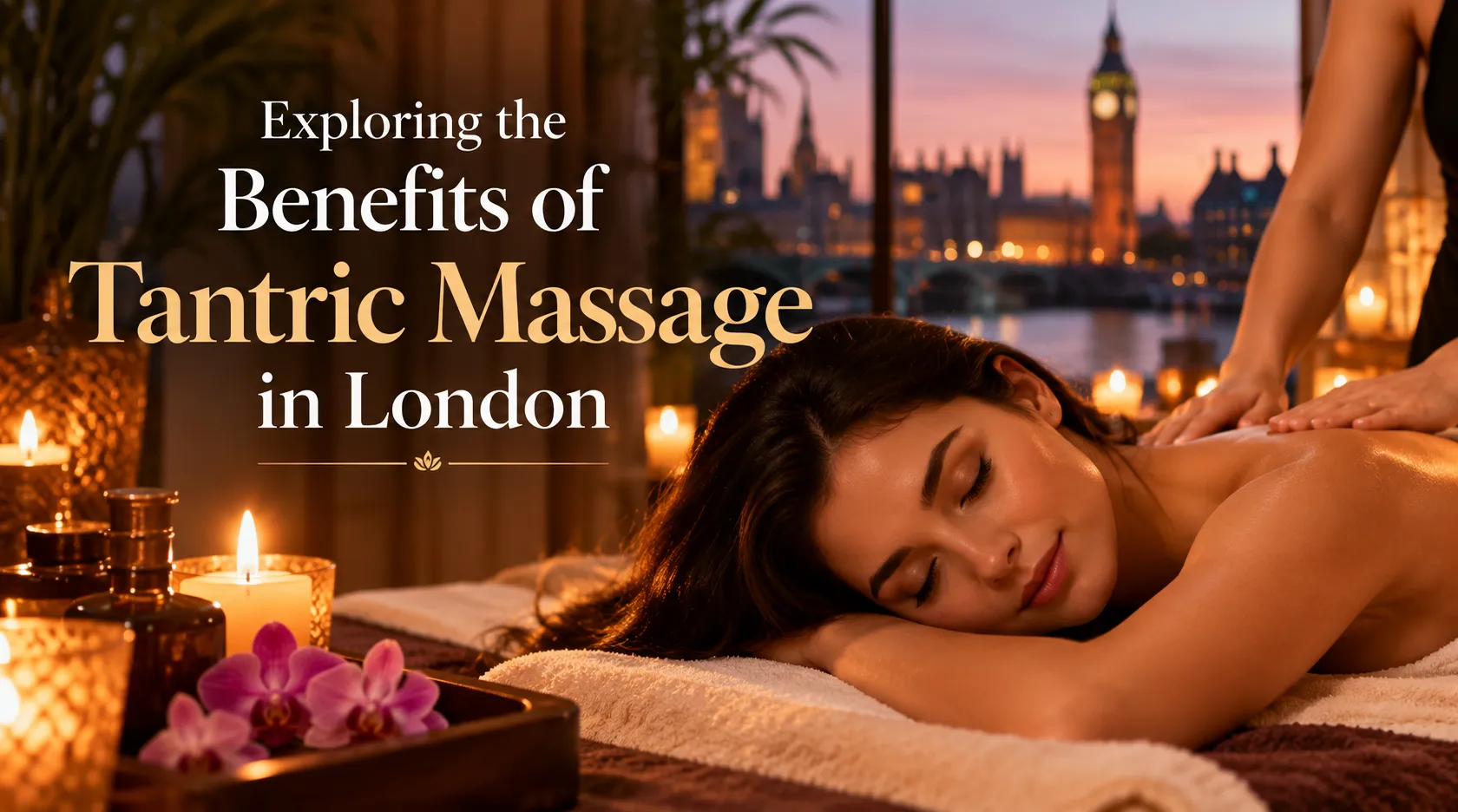
London life rarely moves slowly.
Between long working hours, crowded transport, constant notifications, social commitments and the general pace of the city, it can become surprisingly difficult to switch attention away from external demands and back towards the body.
That is one reason people explore practices centred on relaxation, mindful touch, breath awareness and personal wellbeing.
Tantric massage is one such practice.
Rather than viewing massage purely as something done to tired muscles, a Tantric approach may place greater emphasis on awareness, breathing, relaxation, sensory attention and the relationship between physical sensations and mental state.
For people researching the potential benefits of receiving a Tantric massage in London, it is important to approach the subject realistically.
A Tantric massage should not be presented as a medical treatment or a guaranteed solution to stress, pain, emotional difficulties or relationship concerns. Experiences vary from person to person, and different practitioners may also interpret Tantra in different ways.
What a thoughtfully delivered session can offer is space.
Space to slow down.
Space to become more conscious of breathing.
Space to notice physical tension.
And, for some people, space to reconnect with sensations that may be overlooked during a demanding everyday routine.
This guide explores those potential benefits, what a session may involve, how Tantric principles differ from ordinary massage, and what to consider when looking for professional Tantric massage in London.
What Is Tantric Massage?
Tantric massage is a broad term rather than one universally standardised massage method.
Different practitioners and traditions may approach it differently.
Some sessions place greater emphasis on relaxation and flowing massage techniques. Others incorporate breath awareness, meditation-inspired practices, mindful movement or ideas associated with traditional and modern Tantra.
What commonly distinguishes the approach is the intention to make the receiver more aware of the whole experience rather than treating massage as a purely mechanical process.
Instead of thinking only about muscles, pressure and physical manipulation, attention may also be placed on:
- breathing
- awareness of physical sensations
- relaxation
- slowing down
- mindful attention
- personal boundaries
- communication
- whole-body awareness
- the relationship between body and mind
This does not mean that every Tantric session follows the same sequence.
A professional session should be clearly explained beforehand so that the person receiving it understands what the service involves, what is optional and what their boundaries are.
Potential Benefits of Receiving a Tantric Massage in London
The word “benefit” should be used carefully.
People can respond very differently to massage, mindfulness and relaxation practices.
However, several aspects commonly associated with Tantric massage overlap with broader wellbeing practices such as massage, mindful breathing and body awareness.
For that reason, some people describe the following experiences after a session.
1. Creating Space for Deep Relaxation
One of the most straightforward reasons people book massage is relaxation.
This may be especially relevant in London, where many people spend much of their day moving between work, transport, screens and appointments.
Even outside working hours, the mind may remain occupied.
A carefully paced massage gives the receiver permission to stop doing and simply experience.
The combination of a quiet environment, slower breathing, physical touch and temporary freedom from everyday responsibilities may help create a sense of calm.
That does not mean massage eliminates the causes of stress.
Rather, it can provide a period in which those demands are temporarily removed.
For some clients, this opportunity to slow down is itself the most valuable part of the session.
2. Becoming More Aware of the Body
Modern routines can make it easy to become disconnected from physical sensations.
Someone may sit at a desk for hours without noticing raised shoulders.
Another person may rush from one meeting to another without realising how shallow their breathing has become.
Others may simply spend so much time thinking, planning and reacting that they pay relatively little attention to what their body is communicating.
Tantric massage may encourage the opposite.
Instead of ignoring sensations, the receiver is invited to notice them.
Where does the body feel relaxed?
Where is tension being held?
Does breathing change when a particular area relaxes?
Is the mind racing, or gradually becoming quieter?
This kind of observation is closely related to broader mindfulness principles.
The objective is not necessarily to change every sensation but to become more conscious of what is happening in the present moment.
3. Supporting a Stronger Mind-Body Connection
The phrase “mind-body connection” can sound abstract, but the basic idea is simple.
Our mental and physical experiences affect one another.
Stress may influence breathing patterns.
Fatigue can affect concentration.
Physical tension can make relaxation more difficult.
Likewise, intentionally slowing the breath or relaxing the body may change how someone experiences the moment.
A Tantric massage can create an environment where people pay closer attention to this relationship.
A therapist may encourage slower breathing or give the receiver time to notice sensations instead of rushing through the massage.
This awareness can make the session feel different from a conventional appointment where the focus is primarily on muscles or physical pressure.
For some people, the experience becomes less about receiving a technique and more about becoming present within their own body.
4. Encouraging Mindfulness and Present-Moment Awareness
Mindfulness is essentially the practice of bringing attention to what is happening now.
That might involve noticing breathing, sensations, sounds or thoughts without immediately reacting to them.
Tantric traditions often place importance on awareness and presence, which means certain Tantric massage practices can naturally overlap with mindfulness.
During a session, there is usually very little the receiver needs to accomplish.
There are no emails to answer.
No journey to organise.
No meeting to prepare for.
No performance target.
The experience creates an opportunity to concentrate on simple immediate sensations.
For people whose normal routine involves constant mental stimulation, that can feel unusually restorative.
It may also explain why someone can leave a relaxation-focused session feeling mentally quieter even though none of their external responsibilities have changed.
5. Encouraging Conscious Breathing
Breathing happens automatically, but the way we breathe changes according to activity and emotional state.
When people feel hurried or tense, breathing may become faster or shallower.
When they relax, it often becomes slower.
Some Tantric practices deliberately bring attention to breathing.
The purpose does not have to be complicated.
Simply noticing the breath can provide an anchor for attention.
During massage, conscious breathing can also help the receiver remain present instead of allowing the mind to drift constantly back towards work or other concerns.
This is one area where Tantric massage, meditation and Tantric yoga can overlap.
All three may use attention to breath as a way of developing greater awareness of the body and present experience.
6. Offering a Break From London’s Sensory Overload
London is stimulating by design.
Traffic, underground stations, crowds, advertising, phones, conversations and busy public environments create a continuous stream of information.
For many people, this is part of the excitement of living in or visiting the capital.
But constant stimulation can also make genuine quiet difficult to find.
A private massage environment creates contrast.
Lighting may be softer.
Movement is slower.
Conversation may be limited.
Phones can be put aside.
The receiver can concentrate on a single experience rather than reacting to hundreds of competing inputs.
This contrast between city life and a quiet wellbeing session can make the experience particularly appealing to professionals, frequent travellers and people with demanding schedules.
7. Increasing Sensory Awareness
One feature often associated with Tantric practice is paying closer attention to sensation rather than moving through an experience automatically.
In massage, that might involve becoming more aware of temperature, pressure, breathing, movement or areas of physical tension.
The goal does not have to be intensity.
In many cases, slowing the experience down actually makes subtle sensations easier to notice.
This can be particularly meaningful for people who feel they spend most of their lives “in their head”.
They may work with information all day, communicate through screens and devote enormous attention to decisions and deadlines.
Massage provides an opportunity to shift attention away from constant thinking and towards physical experience.
8. Supporting Personal Relaxation Rituals
Wellbeing often becomes easier to maintain when it is treated as part of a routine rather than an emergency response.
Some people only think about relaxation after they have become exhausted.
Others deliberately build periods of rest into their schedule.
A massage appointment can function as one element within a broader relaxation routine that could also include walking, meditation, exercise, adequate sleep, yoga or time away from screens.
Tantric massage does not need to replace those practices.
It can complement them.
Someone interested in Tantric yoga, for example, may appreciate the common emphasis on breath, awareness and presence.
Another person exploring holistic wellness courses may encounter similar ideas around body awareness, relaxation practices and intentional attention.
The important distinction is that these practices serve different purposes and should not automatically be treated as substitutes for medical care or psychological treatment.
9. Creating Time for Personal Reflection
Relaxation often creates mental space.
When people are constantly occupied, they may have very little opportunity to notice how they actually feel.
A quiet massage session may allow thoughts and emotions that have been pushed into the background to become more noticeable.
That does not mean a massage therapist should act as a psychotherapist unless they are separately trained and qualified to do so.
Instead, the session can simply provide a calm environment in which the receiver has time away from ordinary distractions.
Some people leave feeling physically relaxed.
Others notice that they feel mentally clearer.
Others simply appreciate the temporary pause.
All are valid outcomes.
10. Helping People Become More Comfortable Communicating Preferences
A good massage experience requires communication.
Before the session begins, clients should feel able to ask questions about:
- what the massage involves
- session length
- boundaries
- areas they would prefer not to have massaged
- pressure preferences
- privacy
- therapist experience
- hygiene
- location
- pricing
This communication is particularly important with Tantric massage because different studios and practitioners may use the term differently.
A professional therapist should never expect a client to guess what will happen.
Clear communication before the appointment helps establish trust and allows both client and practitioner to understand expectations.
It can also encourage clients to become more comfortable expressing what makes them feel relaxed or uncomfortable.
Is Tantric Massage the Same as a Standard Massage?
Not necessarily.
Traditional massage services may focus primarily on muscle tension, relaxation or established manual techniques.
Tantric massage may combine massage with a broader emphasis on awareness, breath, sensory experience and Tantric philosophy.
However, there is no single international definition governing every service described as Tantric massage.
That makes choosing a provider especially important.
Rather than relying only on the name of the treatment, read the description of the actual session.
Ask what techniques are used.
Understand the boundaries.
Check whether the therapist’s approach matches what you are seeking.
Two businesses can both advertise Tantric massage while providing noticeably different experiences.
What Is the Relationship Between Tantric Massage and Tantric Yoga?
Tantric massage and Tantric yoga are not the same thing, although they may share certain underlying ideas.
Tantric yoga usually involves active personal practice.
Depending on the school or teacher, this may include physical postures, meditation, breath practices, concentration, philosophy or other contemplative techniques.
Massage is different because the receiver is primarily receiving a service from a practitioner.
The overlap is found more in principles than format.
Both may encourage awareness.
Both may involve conscious breathing.
Both may encourage people to pay attention to bodily experience.
Both may treat presence as something worth practising rather than simply a side effect of relaxation.
For someone already interested in Tantric yoga, massage can therefore feel familiar in philosophy while remaining a very different practical experience.
Can Tantric Massage Help With Stress?
Massage can be relaxing, and some massage research has reported short-term changes in stress-related measures or anxiety.
However, this should not be interpreted as evidence that Tantric massage cures chronic stress or anxiety disorders.
It is more accurate to think of it as a relaxation experience.
Someone may feel calmer during or after a session because they have spent uninterrupted time in a quiet setting receiving massage and focusing on breathing.
That can be valuable.
But persistent anxiety, depression or significant psychological distress should be discussed with an appropriately qualified healthcare professional.
Wellbeing services work best when their role is described clearly rather than exaggerated.
Can Tantric Massage Improve Sleep?
People often say they sleep well after a relaxing massage, but individual experiences vary considerably.
Relaxation itself may make it easier for some people to unwind later in the day.
However, sleep difficulties can have many causes.
Persistent insomnia, sleep apnoea or unexplained sleep disruption should not simply be treated with massage.
A useful way to think about massage is as part of an evening or wellbeing routine rather than a guaranteed sleep treatment.
For example, someone might schedule a massage, reduce screen exposure afterwards, keep the rest of the evening quiet and allow themselves enough time to sleep.
The combination of habits may support relaxation more effectively than relying on any single activity.
What About Muscle Tension?
General massage techniques are often used because people find them pleasant and relaxing when muscles feel tight.
Someone who spends long hours sitting, travelling or working at a computer may particularly appreciate physical relaxation.
However, pain requires sensible judgement.
Massage should not be used as a substitute for diagnosis when pain is severe, persistent, unexplained or associated with injury or other concerning symptoms.
A professional massage provider should be comfortable explaining the limits of their service.
Choosing the Best Tantric Studio in London for Your Needs
People searching online for the best tantric studio in London are usually trying to solve a more practical question:
“How do I know which provider is right for me?”
There is no universal answer.
The appropriate studio depends on the type of experience you want, your preferred location, privacy expectations, budget and the style of practitioner you feel comfortable with.
Instead of relying solely on promotional language, look for practical signals.
A professional provider should explain services clearly.
Information about booking should be easy to find.
Locations should be transparent.
Pricing or pricing guidance should be available.
Therapist profiles should provide enough information to help clients make an informed choice.
The business should also make it easy to ask questions before confirming an appointment.
Most importantly, boundaries and expectations should be discussed clearly.
How to Compare Massage Therapists in London
Searches such as most popular massage therapists in London can produce an overwhelming number of options.
Popularity alone does not necessarily indicate suitability.
A more useful approach is to consider whether a therapist’s location, style, experience and service description align with your expectations.
Read the profile carefully.
Look at the location.
Understand whether the appointment is incall or outcall.
Check the session duration and price.
Ask questions if anything is unclear.
You should never feel uncomfortable asking what a massage includes before booking.
A reputable booking process should make the experience clearer, not more mysterious.
Incall vs Outcall Tantric Massage in London
Location can significantly shape the overall experience.
Incall Sessions
An incall appointment takes place at the provider’s designated location.
Some people prefer this because the setting is already prepared for massage.
There may be fewer distractions than at home or in a hotel.
It also allows the client to leave their everyday environment temporarily and treat the appointment as dedicated personal time.
Outcall Sessions
An outcall service involves the therapist travelling to an appropriate location.
For visitors staying in London or people with demanding schedules, this can be convenient.
The main advantage is avoiding additional travel.
However, clients should confirm availability, travel policies and any location restrictions before booking.
The right option depends primarily on convenience, privacy and personal preference.
London Locations and Convenience
Travel time matters in London.
A studio may look close geographically but still require a complicated journey.
For that reason, location should be considered when selecting an appointment.
People working or staying around Central London may look for therapists near areas such as Mayfair, Bayswater, Marylebone, Paddington, Marble Arch, Baker Street, Bond Street, Kensington, Sloane Square, Earls Court, Gloucester Road or nearby districts.
Choosing a convenient location can help preserve the relaxed feeling of the appointment.
There is little benefit in scheduling a calming session if you immediately need to rush across the city afterwards.
Whenever possible, leave extra time around the booking.
How to Prepare for a Tantric Massage
Preparation does not need to be complicated.
Start by reading the service description thoroughly.
If something is unclear, ask before attending.
It is usually sensible to arrive clean, comfortable and without rushing.
Try not to schedule the appointment between two stressful commitments.
Leave enough travel time so that you are not arriving anxious because of delays.
You may also want to think beforehand about:
your preferred pressure;
any areas of sensitivity;
anything you do not want included;
what type of atmosphere helps you relax;
and what you hope to get from the experience.
You do not need to arrive with a spiritual objective.
Some people book because they are curious about Tantra.
Others simply want a relaxing massage.
Others are interested in mindfulness and body awareness.
Clear expectations make it easier to choose an appropriate session.
What Should You Expect During a Professional Session?
The exact format depends on the provider.
However, a well-organised session generally begins with communication rather than immediately starting the massage.
The therapist or booking team should be able to explain what has been arranged.
There should be an opportunity to discuss preferences and relevant boundaries.
During the massage, clients should still feel able to communicate.
Relaxation does not remove consent.
If something feels uncomfortable, the client should feel able to say so.
Professionalism is demonstrated not merely through technique but through communication, privacy, cleanliness and respect.
Consent and Boundaries Matter
This deserves its own section because it is one of the most important aspects of any professional bodywork experience.
A client agreeing to a massage does not mean they have agreed to every possible technique.
Likewise, preferences can change during a session.
Good practice means boundaries remain clear throughout the appointment.
Clients should feel comfortable communicating.
Therapists should respect those decisions without pressure.
A provider that treats consent, communication and privacy seriously is creating a better environment for genuine relaxation.
Without trust, it is difficult to relax fully.
Tantric Massage and Holistic Wellbeing
The word “holistic” is often used broadly.
At its most useful, it simply means considering wellbeing from several connected perspectives rather than focusing on one isolated factor.
Someone interested in holistic wellbeing might combine massage with exercise, sleep habits, meditation, yoga, nutritious food, time outdoors or stress-management practices.
They may also explore structured holistic wellness courses to learn more about practices such as mindfulness, breathing, yoga or complementary approaches to relaxation.
Tantric massage can sit within that broader lifestyle.
It should not, however, be presented as a replacement for evidence-based healthcare.
The strongest wellbeing approach is usually one that understands the purpose and limitations of each practice.
Who Might Enjoy Tantric Massage?
Tantric massage may appeal to adults who:
want dedicated time to relax;
are interested in mindful body awareness;
already practise meditation or yoga;
are curious about Tantra;
want a break from a demanding London routine;
or simply prefer massage experiences that emphasise atmosphere and presence as well as physical touch.
Someone does not need previous Tantra experience.
Neither do they need to believe in every spiritual interpretation associated with Tantric traditions.
It is possible to appreciate breathing, relaxation and mindful awareness without adopting a particular philosophy.
Who Should Seek Professional Medical Advice First?
Massage is not appropriate in every situation.
If you have a significant injury, acute illness, unexplained pain, serious medical condition, recent surgery, skin infection or another health concern that could be affected by massage, seek appropriate medical advice.
Pregnancy may also require modified massage techniques and a suitably trained practitioner.
When unsure, ask.
A responsible provider should never object to a client checking whether massage is appropriate for their circumstances.
What Makes a Tantric Massage Experience Feel Luxurious?
Luxury is not simply expensive décor.
In a wellbeing setting, luxury often comes from attention to detail.
Privacy.
Clean surroundings.
Unhurried booking.
Clear communication.
Fresh linens.
A calm environment.
Professional presentation.
A therapist who listens.
Enough time to settle before the session.
Enough time afterwards not to feel rushed out of the door.
These practical details often influence the experience more than extravagant claims.
For London clients, convenience also plays a role.
Being able to select an appropriate therapist and location can make the appointment feel organised from the beginning.
Aftercare: What Should You Do After a Session?
There is no complicated aftercare ritual required for most relaxation massage experiences.
Give yourself some time.
Have water available.
Avoid rushing immediately into another demanding activity if possible.
Notice how your body feels.
Some people prefer a quiet walk afterwards.
Others simply return home.
If the session involved breathing or mindfulness techniques that you found useful, you may choose to practise them independently later.
The aim is not to preserve a particular “state”.
Instead, allow the benefits of taking genuine time away from everyday demands to extend naturally into the rest of your day.
Making Tantric Massage Part of a Balanced Wellness Routine
There is no universal rule for how often someone should book.
Frequency should depend on personal preference, budget and reasons for attending.
Some people enjoy massage occasionally.
Others build it into a regular wellbeing routine.
More is not automatically better.
The important question is whether the experience continues to feel positive, intentional and proportionate within your lifestyle.
Massage should complement life rather than become something you feel dependent upon for basic emotional regulation.
Frequently Asked Questions
What are the potential benefits of receiving a Tantric massage in London?
Potential benefits commonly described by clients include relaxation, greater body awareness, mindful attention, slower breathing and a temporary break from daily stress. Experiences vary, and Tantric massage should not be treated as a guaranteed medical or psychological treatment.
Is Tantric massage suitable for beginners?
Yes. Previous experience with Tantra, meditation or yoga is not generally necessary. A good provider should explain the session beforehand and answer questions clearly.
Is Tantric massage the same as Tantric yoga?
No. Tantric yoga is generally an active personal practice that may involve movement, breathing, meditation and philosophy. Tantric massage is a practitioner-led bodywork experience. They can share themes such as awareness and breath without being the same practice.
How do I find the best tantric studio in London?
Focus on suitability rather than promotional rankings. Review the provider’s service descriptions, therapist profiles, locations, pricing, privacy standards, hygiene practices and booking process. Ask questions before booking if anything is unclear.
How can I choose among the most popular massage therapists in London?
Popularity should be only one consideration. Choose according to location, experience, style, availability and whether the therapist’s service description matches the type of appointment you want.
Can I request a particular therapist?
Many London massage providers allow clients to request a specific practitioner, although availability varies. Confirm this when booking.
Should I choose incall or outcall massage?
Choose according to privacy, convenience and location. Incall sessions provide a dedicated massage environment, while outcall services can reduce travel for people staying in suitable London accommodation.
What should I wear to the appointment?
Ask the provider if there are specific requirements. The priority is arriving clean and comfortable and understanding what the session involves beforehand.
Do I need to understand Tantra before booking?
No. Curiosity is enough. You can approach the experience primarily as relaxation and mindful bodywork.
Can massage cure anxiety or chronic stress?
Massage may help some people feel relaxed, but it should not be described as a cure for anxiety disorders or chronic psychological stress. Persistent mental health concerns should be discussed with an appropriately qualified professional.
Can Tantric massage help me sleep better?
Some people report feeling calmer after massage and may find it easier to unwind. This is not a guaranteed treatment for insomnia or other sleep disorders.
Are holistic wellness courses necessary before trying Tantric massage?
No. Holistic wellness courses are a separate learning option for people who want to explore wellbeing practices in greater depth. No course is normally required simply to receive a massage.
A More Mindful Way to Slow Down in London
The real value of Tantric massage does not need exaggerated promises.
For many people, the attraction is much simpler.
Modern life encourages speed.
Tantric practice encourages attention.
Modern life keeps the mind occupied.
Massage brings attention back to physical experience.
Modern London provides almost unlimited stimulation.
A private wellbeing session can provide a rare period of stillness.
Those contrasts help explain why people continue exploring the potential benefits of receiving a Tantric massage in London.
A thoughtful session may offer relaxation, greater body awareness, mindful breathing and an opportunity to step temporarily outside the pace of everyday life.
For anyone considering a session, the most important step is choosing an environment in which communication, privacy, boundaries and professionalism are treated seriously.
From there, the experience does not need to achieve anything extraordinary.
Sometimes the opportunity to slow down, breathe and reconnect with the present moment is valuable enough.



Leave a Reply