

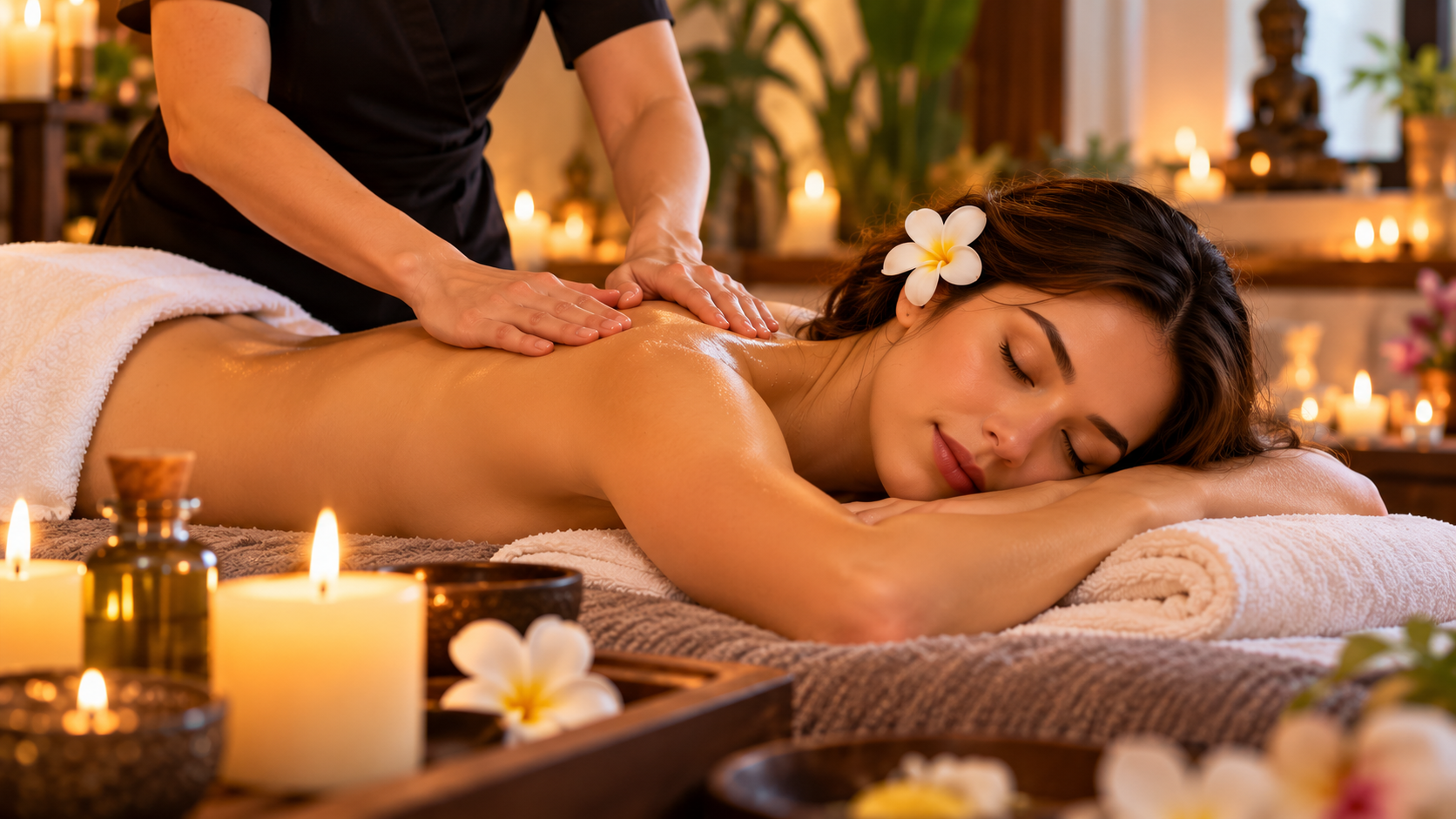
Tantric massage is often described with sweeping promises. A more useful answer is also a more honest one: many adults choose it for relaxation, focused attention, sensory awareness, and a deliberate break from everyday pressure. Those experiences can feel meaningful, but they are not the same as a medically proven treatment.
Research has examined massage therapy in general, including its possible effects on relaxation and certain types of short-term pain. It has not established tantric massage as a standardised clinical intervention. Tantric sessions also vary between practitioners, so the label alone does not tell you exactly what will happen or what result you will have.
This guide explains the potential benefits without turning possibilities into guarantees. It covers what massage evidence can reasonably tell us, what is better understood as a personal wellness experience, how breath and mindful attention may contribute, and what to expect when arranging a massage in London. It also explains consent, boundaries, safety, and how to assess a studio or therapist before booking.
The Short Answer: What Are the Potential Benefits of Tantric Massage?
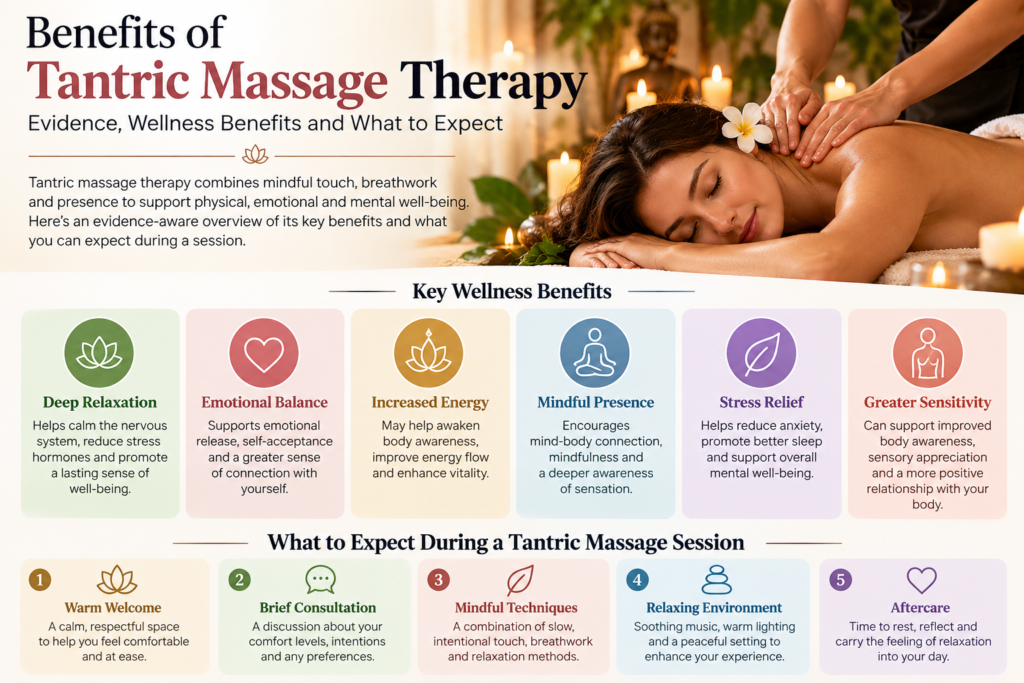
People may seek tantric massage for a combination of physical relaxation and present-moment awareness. Depending on the practitioner and the agreed session, potential benefits may include:
- A temporary sense of relaxation or respite from everyday stress
- Reduced feelings of general muscular tension
- A slower, less hurried experience of touch and attention
- Greater awareness of breathing, physical sensations, and comfort
- An opportunity to practise communicating preferences and boundaries
- A calming transition out of a demanding routine
- A personal sense of connection between mental and physical wellbeing
These are potential experiences, not promised outcomes. Evidence about massage varies by condition and study design, and findings about conventional massage cannot automatically be assigned to tantric massage. Claims that it detoxifies the body, cures anxiety, releases trauma stored in muscle, boosts immunity, corrects energy pathways, or replaces healthcare are not supported by robust evidence.
The most credible reason to book is therefore not the expectation of a cure. It is an informed interest in a consensual, professionally managed wellness experience whose pace and scope have been explained in advance.
What Is Tantric Massage?
Tantric massage is a broad term rather than a single regulated clinical protocol. In modern wellness settings, it commonly refers to slow, attentive bodywork that may incorporate breathing, pauses, sensory focus, and an emphasis on awareness rather than rapid or forceful technique. Some providers connect the practice with spiritual or energetic ideas. Those ideas may be personally meaningful, but they should be presented as traditions or beliefs rather than established anatomy or medical fact.
The exact format can differ substantially. A session may vary in pressure, duration, clothing or draping arrangements, oils, areas of the body included, the role of breathwork, and whether the service has a sensual dimension. Because there is no universal session format, the provider should explain the scope clearly before you commit.
That variation is one of the most important things for a first-time client to understand. “Tantric massage” should never be used as a substitute for a clear conversation. You should know what is offered, what is excluded, how privacy is protected, how consent is handled, what hygiene measures are used, and how to pause or end the session.
Tantric Massage and Conventional Massage: Where They Overlap
Conventional massage usually focuses on soft tissue through strokes, kneading, pressure, or movement selected for a stated purpose. The purpose may be relaxation, general muscular comfort, sport recovery, or support alongside care for a particular problem. A qualified clinical or sports massage provider may assess physical symptoms and work within a defined professional scope.
Tantric massage can share familiar features with relaxation massage: a calm environment, oil or lotion, long strokes, attention to comfort, and time away from routine demands. Its distinctive emphasis is often placed on pace, sensory attention, breath, and a whole-person experience. It may be less focused on correcting a specific muscle problem and more focused on how the person experiences touch and presence.
Neither label automatically proves quality. A good experience depends on clear expectations, appropriate training for the techniques used, hygiene, consent, honest marketing, and the practitioner’s ability to stay within their competence. If you are comparing adjacent styles, read the provider’s description of sensual massage in London rather than assuming that the labels mean the same thing. Someone seeking diagnosis, rehabilitation, or treatment for persistent pain should consult an appropriate healthcare professional rather than choosing a service solely because it uses the word “therapy.”
What Does the Evidence Actually Show?
The evidence needs to be read in layers.
First, there is research on massage therapy generally. The US National Center for Complementary and Integrative Health notes that massage has been studied for several pain conditions, anxiety, and quality of life, but findings and evidence quality differ. A 2024 systematic review in JAMA Network Open mapped recent reviews of massage for painful adult conditions. It found that most conclusions were supported by low- or very-low-certainty evidence. A small number reached moderate certainty, and high-certainty conclusions were absent.
That does not mean massage has no value. It means confident claims must be narrower than many marketing pages suggest. Massage may provide short-term relief in some contexts, while it is rarely established as superior to other active approaches. Individual response also varies.
Second, there is research on related components such as slow breathing, mindfulness, and affective touch. For example, a systematic review and meta-analysis of voluntary slow breathing found associations with changes in heart-rate variability during and after practice. Research on pleasant, slow touch also reports psychological and physiological associations. These studies may help explain why some people find slow, attentive experiences calming.
However, evidence for one component is not proof for a complete tantric massage session. A breathing study does not show that tantric massage treats a health condition. Research on touch does not validate claims about chakras, detoxification, trauma release, fertility, or immunity. The responsible conclusion is that adjacent research offers context, not clinical confirmation of tantric massage.
Third, there is the person’s subjective experience. Feeling rested, grounded, comfortable, emotionally lighter, or more aware of the body is real as an experience even when it is not a medical outcome. It can be described in personal terms without claiming that a disease has been treated.
1. Time Set Aside for Relaxation
The clearest potential benefit is also the least complicated: a session creates protected time to slow down. Phones, work messages, travel decisions, and household tasks temporarily move out of view. The environment, pace, and continuous attention can make it easier to shift away from everyday demands.
UK advertising guidance for massage and bodywork generally accepts appropriately worded claims that massage may aid relaxation, help with everyday stress, support sleep, and promote a sense of wellbeing. The key is proportion. “May help you relax” is a wellness statement. “Treats an anxiety disorder” is a clinical claim requiring a much stronger and more specific evidence base.
Relaxation is not identical for everyone. Some people settle quickly. Others need time to become comfortable with the room, the practitioner, or being touched. A professional session should not pressure you to perform relaxation or react in a particular way. Quietness, laughter, uncertainty, emotion, or simply feeling neutral can all occur. The experience should remain within the boundaries you agreed.
For adults whose days are highly scheduled, the value may lie in permission to stop doing and start noticing. This is a reasonable wellness objective, provided it is not sold as a cure for burnout, panic, depression, or trauma.
2. Temporary Relief From General Muscular Tension
Massage can make tight or tired muscles feel more comfortable, particularly when pressure and positioning suit the individual. Slow gliding strokes, warmth, and supported rest may contribute to a sense of physical ease. This is one area where tantric massage may overlap with a conventional relaxation massage.
The word “temporary” matters. A pleasant reduction in general tension is not evidence that an injury has healed or that the cause of recurring pain has been resolved. Posture, sleep, workload, activity, stress, illness, and many other factors can influence discomfort.
If your goal is a specific physical result, ask what techniques the practitioner is trained to provide. Tantric massage may not be the right service for an acute injury, rehabilitation need, unexplained pain, or a condition requiring clinical assessment. A responsible studio will not tell you to replace prescribed care or pain medicine with massage.
Pressure should feel acceptable throughout. More pressure is not automatically more effective, and severe pain is not a sign that treatment is working. Ask for an adjustment at any time. If an area is injured, numb, inflamed, recently operated on, or otherwise medically sensitive, disclose that before the session and seek clinical advice where appropriate.
3. A Stronger Sense of Body Awareness
Modern routines can draw attention outward for hours at a time. Screens, commuting, noise, and deadlines make it easy to notice the body only when something hurts. A slower massage may invite attention back to breathing, temperature, contact, comfort, and tension.
This is often described as body awareness or interoception. It can mean noticing where you are bracing, whether you are holding your breath, or which positions feel supported. The practical benefit is not mystical: noticing a sensation gives you information. You can ask for a pillow, request lighter pressure, change position, pause, or decide that a particular form of touch is not for you.
Research on mindfulness and objective body awareness is mixed and should not be exaggerated. A 2025 meta-analysis of mindfulness and objective interoception reported only a small association, with substantial variation and study-quality concerns. It is safer to say that a carefully paced session can provide an opportunity to practise noticing sensations. It cannot promise permanent body confidence or clinically significant psychological change.
For some clients, learning to state “slower,” “less pressure,” “avoid that area,” or “I would like to stop” is part of the value. That is not therapy for a communication disorder. It is a practical exercise in paying attention and expressing a preference in a setting where consent should be respected.
4. Breath and Present-Moment Attention
Breath is often part of tantric massage descriptions, but it should be approached without inflated claims. Slow, comfortable breathing can provide a simple point of attention. It may help some people settle into the pace of a session, especially when the instruction is optional and not physically demanding.
Research on slow breathing as a separate practice has found changes in measures related to autonomic regulation, including heart-rate variability. This does not prove that a tantric massage “resets the nervous system,” activates healing, or produces a guaranteed emotional result. It suggests that breathing pace can influence short-term physiological measures and perceived state.
A practitioner should not force breath holds, rapid breathing, or techniques that make you dizzy, distressed, or short of breath. Natural breathing is enough. People with respiratory, cardiovascular, panic-related, or other relevant conditions should seek suitable advice before attempting intensive breathwork.
The most grounded use of breath is simple: notice it, avoid straining, and use it as one of several ways to communicate comfort. If an instruction feels intrusive or unpleasant, you can decline it.
5. A Calmer Transition Into Rest or Sleep
Some people report feeling sleepy or more settled after a massage. A session scheduled after work may also create a useful transition between a demanding day and the evening. UK advertising guidance allows cautious statements about massage aiding sleep, but this should not become a promise to treat insomnia.
Sleep is affected by many variables, including routine, light exposure, alcohol, caffeine, medication, mental health, pain, breathing disorders, and medical conditions. One relaxing evening cannot establish a lasting effect. If sleep problems are persistent, severe, or affecting daily functioning, speak to a qualified healthcare professional.
To support a gentle transition after a session, avoid rushing immediately into a tightly scheduled commitment. Give yourself time to dress, drink according to normal thirst, and travel safely. There is no need for ritualised “detox” hydration. Water does not flush massage-released toxins because massage has not been shown to release stored toxins from muscle.
6. Sensory Variety and Focused Attention
A tantric session may use changes in pace, pressure, temperature, music, scent, or pauses to create a more noticeable sensory experience. For some adults, that variety makes it easier to remain present than during a repetitive routine.
Pleasant touch has been studied across many settings, and a large 2024 meta-analysis of touch interventions found associations with several physical and mental health outcomes. Yet the interventions were diverse, blinding was difficult, and possible small-study bias was identified. These findings support continued research into touch; they do not establish a guaranteed effect from tantric massage.
Sensation is also personal. Fragrance can be relaxing to one person and trigger a headache or allergy in another. Firm pressure can feel reassuring or overwhelming. Music can help or distract. Before the session, mention sensitivities to oils, scents, sound, heat, materials, or particular positions. A high-quality experience adapts to the client rather than insisting that one atmosphere works for everyone.
7. Practising Clear Boundaries and Choice
Consent is not an administrative formality completed at reception. It is an ongoing process, as reflected in the CNHC Code of Conduct, Ethics and Performance. A client needs enough information to decide freely, and the decision can change at any point. Consent to one technique, area, or stage of a session is not automatic consent to another.
This makes boundary communication central to tantric massage. Before booking, the studio should be able to explain the service without evasive language. Before the session, the practitioner should confirm the agreed scope, ask about relevant health information, and make it easy to identify areas that should not be touched. During the session, you should be able to request a change or stop without argument.
The benefit here is agency. A well-managed session can give a person a structured setting in which their preferences matter. It should never be marketed as treatment for trauma or as a way to push through discomfort. Anyone with a history that makes touch difficult may prefer to discuss options with an appropriately qualified healthcare or mental-health professional before booking.
Benefits People Commonly Describe but Research Cannot Guarantee
Clients and providers sometimes use words such as grounded, connected, energised, open, or emotionally lighter. These descriptions can communicate personal experience, but they are not precise clinical outcomes. Two people can use the same word to mean different things.
Spiritual language requires the same care. A person may understand the session through concepts such as energy, balance, or chakra awareness. Those concepts can be acknowledged as part of a personal or traditional framework. They should not be presented as proven biological structures, and they should not be used to diagnose illness.
Emotional reactions can occur during many quiet or touch-based experiences. Feeling tearful does not show that trauma has been released from tissue. A massage practitioner should not diagnose the meaning of a reaction, promise psychological healing, or position themselves as a substitute for a qualified therapist.
Good content leaves room for personal meaning while protecting the reader from misinformation. You do not need to dismiss an experience to describe it accurately.
Massage, Mindfulness and Yoga for Holistic Wellness
People searching for yoga for holistic wellness may also be interested in massage because both can encourage attention to breathing, position, comfort, and the present moment. The activities are nevertheless different.
Yoga is an active practice with many forms. It may involve movement, strength, mobility, balance, breathing, meditation, or philosophical study. Massage is primarily received, with the practitioner applying agreed touch or bodywork. One does not reproduce the effects or skills of the other.
They may fit into the same personal routine when used for suitable reasons. Yoga can offer a repeatable practice that a person develops over time. Massage can provide an occasional period of supported rest and sensory attention. Neither should be used to bypass medical assessment, and neither requires a person to accept spiritual claims that do not match their beliefs.
If you combine them, keep the plan practical. Avoid a demanding yoga session immediately after a massage if you feel sleepy or physically tender. Choose qualified instruction, disclose relevant conditions, and pay attention to how your body responds rather than chasing a prescribed feeling of balance.
What to Expect Before a Tantric Massage in London
The booking conversation should give you more than a time and address. It should help you decide whether the service matches your expectations.
Ask what the session includes, what it does not include, how long it lasts, what it costs, and whether the stated duration includes consultation, showering, or changing time. Review the current session prices, confirm the London location, and establish whether the appointment is incall or one of the provider’s outcall massage options. Ask about clothing or draping, products used, shower facilities if relevant, and any allergy information.
You should also be able to ask how the studio handles consent, privacy, cancellations, late arrival, payment, and personal data. Read the current booking FAQs and terms rather than relying on an old article or third-party listing. If an answer is unclear, seek clarification before paying a deposit.
Share health information that could affect safety without feeling obliged to disclose unrelated personal details. Relevant information may include pregnancy, recent surgery, anticoagulant medication, a bleeding disorder, osteoporosis, a current or suspected blood clot, significant heart or circulatory disease, acute injury, fever, infection, skin damage, allergies, or active cancer treatment. When unsure, ask a healthcare professional whether massage is appropriate.
Decide what you want from the appointment. “I would like a slow relaxation-focused session with light-to-medium pressure” is more useful than expecting the practitioner to infer your needs. Identify areas to avoid and anything that would make you more comfortable.
What Happens During a Session?
There is no universal tantric massage sequence, so the provider’s verified description should take priority. A professional session will usually begin with a short check-in. The practitioner may confirm the requested pressure, relevant health considerations, and boundaries. This is the right time to correct any misunderstanding.
You may be invited to change or prepare in private. Only undress to the extent that is appropriate to the agreed service and comfortable for you. The provider should explain draping or clothing arrangements before the session. Privacy, dignity, and a clear option to decline are essential.
The massage itself may begin with slower contact and develop gradually. Oil or lotion may be used, so report allergies or scent sensitivities. The practitioner may invite attention to breathing or sensation. Any such guidance should remain optional.
Communication can be brief and direct. You can ask for less pressure, more support under a joint, a change of temperature, avoidance of an area, a pause, or an end to the session. You do not owe a detailed justification. Silence does not remove the practitioner’s responsibility to stay within the agreed scope.
You may feel relaxed, alert, self-conscious, sleepy, emotional, or simply curious. There is no correct reaction. Be cautious of any provider who tells you discomfort is necessary for a breakthrough or that reluctance indicates an energetic blockage.
What to Expect Afterwards
After the session, allow a few minutes to reorient, dress, and check that you feel steady before leaving. Some people feel calm or sleepy; others feel much as they did before. Mild tenderness can occur after firmer work, but severe pain, neurological symptoms, unusual swelling, or feeling medically unwell should not be dismissed as “detox.” Seek appropriate healthcare advice.
Normal hydration and a regular meal are usually sufficient. You do not need supplements, cleansing products, or excessive water to remove toxins. If an oil has been used, follow sensible skin care and stop using a product if irritation develops.
Reflect on the practical parts of the experience. Were the description and actual service consistent? Were boundaries respected? Did the room and materials appear clean? Did you feel able to communicate? Would you choose the same pace and pressure again? These questions are more useful than judging the session against dramatic promises.
How to Choose a Massage Studio in London
A search for the “best massage studio in London” cannot identify one universally best option. The right choice depends on the type of massage you want, your preferred location, the practitioner’s relevant competence, transparent scope, and how well the service fits your boundaries. Start by reading how the studio describes its service, then verify any detail that matters to your decision.
Use the following criteria:
- Clear service descriptions : The studio should explain what each massage style means in its own practice. Vague labels increase the chance of mismatched expectations. Look for an explicit distinction between relaxation or wellness services and regulated healthcare.
- Consent and professional boundaries : The provider should welcome questions about areas included or excluded, clothing or draping, pressure, stopping, and changes of mind. Consent must be voluntary, specific, informed, and ongoing.
- Relevant practitioner information : Review therapist profiles for verifiable information that helps you choose. Do not assume that popularity, appearance, or a long list of adjectives demonstrates training or suitability. If a qualification matters to your decision, ask what it is, who issued it, and what techniques it covers.
- Hygiene and product transparency : Clean linens, hand hygiene, clean equipment, appropriate room preparation, and accurate information about oils or gels are basic expectations. Ask about allergies and cleaning practices if the website does not explain them.
- Transparent pricing and duration : Confirm the total price, deposit, accepted payment methods, cancellation terms, and what the booked time includes. A credible provider should not create pressure through surprise charges or last-minute changes.
- Privacy and data handling : Check how contact and booking information are used. A discreet service still needs a clear privacy policy. Avoid sending more personal information than the booking genuinely requires.
- Accurate wellness language : Be cautious when a studio promises to cure pain, release trauma, detoxify tissue, balance hormones, boost immunity, or guarantee mental-health outcomes. Responsible wording is a meaningful trust signal.
Choosing Among Popular Massage Therapists in London
“Popular massage therapists in London” is a common search, but popularity is only one weak signal. It can reflect marketing reach, schedule availability, location, photography, or time in the market. It does not establish clinical competence, respectful conduct, or personal fit.
Start with the kind of experience you want. Then compare profile information, location, language, pressure preferences, session style, and availability. Ask the booking team to confirm current details because profiles and schedules can change.
Read reviews carefully when available, but do not treat them as medical evidence or a guarantee. Look for specific, consistent comments about communication, professionalism, cleanliness, accurate descriptions, and respect for boundaries. Be wary of reviews that sound copied, make implausible health claims, or provide no useful detail.
For Tantric Massage London, the current therapist directory identifies London areas associated with individual profiles. Use those live profiles rather than reproducing a static list in this article, since availability and locations may change.
When Massage May Not Be Appropriate
Massage is generally considered low risk when it is suitable for the person and performed appropriately, but low risk does not mean no risk. Rare serious harms have been reported, particularly with vigorous techniques or clients who have relevant health vulnerabilities.
Seek medical advice or request an appropriate modification if you are pregnant; have recently had surgery; are receiving cancer treatment; take anticoagulants; have a bleeding disorder or bruise easily; have severe osteoporosis; have a current or suspected blood clot; have significant heart or circulation problems; or have an acute injury, fever, infection, broken skin, or unexplained severe pain.
Massage should not be applied directly over a suspected clot, open wound, burn, fracture, tumour, recent surgical site, area of infection, or medically sensitive device or treatment area without appropriate advice. Cancer Research UK and Macmillan Cancer Support both advise choosing a therapist with suitable experience and discussing necessary adaptations when cancer or cancer treatment is involved.
Stop the session if you feel severe pain, numbness, breathing difficulty, dizziness, panic, or any other concerning symptom. In an emergency, seek urgent medical help. For persistent or unexplained symptoms, consult a qualified healthcare professional.
What Tantric Massage Should Not Replace
Tantric massage should not replace medical diagnosis, prescribed treatment, physiotherapy, psychological therapy, sexual-health care, or emergency help. The word “therapy” in a service name does not by itself mean the service is a regulated clinical treatment.
If you are seeking help for chronic pain, panic attacks, trauma, depression, insomnia, sexual dysfunction, fertility concerns, or another diagnosed condition, begin with an appropriately qualified professional. Massage may sometimes be used as a complementary source of comfort or relaxation, but the plan should reflect your condition and clinical advice.
This distinction protects both client choice and the credibility of the service. Wellness does not need to imitate medicine to have value.
How Often Should You Book?
There is no evidence-based universal schedule for tantric massage. Frequency is a personal and practical choice shaped by your goals, response, budget, health, and the nature of the service.
For a first visit, one session is enough to assess fit. Notice whether the description matched the experience and whether you felt comfortable communicating. Do not commit to a package because a provider claims that a fixed number of sessions is required to remove toxins, unblock energy, or secure a health result.
If you enjoy the experience and there are no safety concerns, you can decide whether occasional appointments suit your broader wellbeing routine. A credible studio should allow you to make that decision without pressure.
A Practical First-Time Checklist
Before booking:
- Read the service description, current price, duration, location, and terms.
- Confirm the session scope and ask what any unclear wording means.
- Check therapist information and verify qualifications if they matter to your goal.
- Mention relevant health conditions, allergies, injuries, pregnancy, or medication.
- Ask a healthcare professional if you are uncertain whether massage is safe for you.
- State pressure preferences, areas to avoid, and any accessibility needs.
- Understand the cancellation, payment, privacy, clothing, and draping arrangements.
During the session:
- Notice whether the agreed boundaries are being followed.
- Ask for changes in pressure, temperature, position, sound, scent, or technique.
- Decline any step you do not want.
- Pause or end the session at any time.
After the session:
- Take time to dress and make sure you feel steady.
- Hydrate normally according to thirst.
- Seek advice for severe or unusual symptoms.
- Judge the experience by comfort, communication, accuracy, hygiene, and respect rather than by extravagant promises.
Is Tantric Massage Right for You?
Tantric massage may suit an adult who wants a slow, sensory, relaxation-focused experience and is comfortable discussing boundaries. It may appeal to someone who values breath awareness, present-moment attention, and a style of massage that is less focused on a single muscle group.
It may not be the right choice if your priority is diagnosis, injury rehabilitation, treatment of a mental-health condition, or a guaranteed clinical outcome. It may also be unsuitable when a health condition makes massage risky or when the provider cannot explain the service clearly enough for informed consent.
The decision should feel unhurried. A reputable London provider will answer practical questions, respect a refusal, and avoid using medical or spiritual certainty to pressure you.
An Evidence-Aware Way to Think About the Benefits
The strongest case for tantric massage is modest but meaningful. It can provide time, attention, consensual touch, and a structured opportunity to notice the body and breathe more slowly. Massage research suggests possible short-term value for relaxation and certain forms of discomfort, although the evidence is uneven and is not specific to tantric massage.
The experience does not need to cure a condition to be worthwhile. It does need to be accurately described, safely delivered, and guided by ongoing consent.
If you are considering tantric massage in London, compare current therapist profiles, check prices, confirm the available London location, and ask questions before booking. Choose the session because its verified scope matches what you want, not because of a promise that no responsible provider can guarantee.
Frequently Asked Questions
Is tantric massage medically proven?
No. Research has studied massage therapy generally, but tantric massage has not been established as a distinct standardised clinical treatment. Some findings about massage, slow breathing, or touch may be relevant context, but they do not prove that tantric massage treats a medical or psychological condition.
What are the most realistic benefits of tantric massage?
The most realistic potential benefits are relaxation, a temporary reduction in feelings of general muscular tension, focused sensory attention, greater awareness of breathing and comfort, and an opportunity to communicate boundaries. Results vary and should not be guaranteed.
Can tantric massage help with anxiety or stress?
Massage may help some people feel calmer and can support relaxation from everyday stress. Evidence about anxiety varies by setting, and tantric massage should not be presented as treatment for an anxiety disorder, panic attacks, or trauma. Seek qualified clinical care for persistent or severe symptoms.
Does massage remove toxins from the body?
There is no good evidence that massage forces stored toxins out of muscle or that extra water is required to flush them away. Drink normally according to thirst. Claims about detoxification should not replace sound information about relaxation, comfort, or safe bodywork.
Will tantric massage reduce cortisol?
It should not be promised. A quantitative review of massage and cortisol found that massage’s effects were generally small and not reliably different from comparison conditions. Feeling relaxed is valid, but it does not prove a particular hormonal change.
What should I wear for a tantric massage?
Arrangements vary by provider and session type. Ask before booking what clothing or draping is expected and how privacy is protected. Only agree to what is clearly explained and comfortable for you.
Can I change my mind during the session?
Yes. Consent is ongoing. You can ask to change pressure or technique, exclude an area, pause, or stop entirely. Agreeing to one part of a session does not mean agreeing to everything else.
How do I find the best massage studio in London for me?
Compare clear service descriptions, consent practices, relevant practitioner information, hygiene, product transparency, pricing, privacy, location, and how readily the studio answers questions. “Best” depends on fit; it should not be assumed from popularity or marketing claims.
Are popular massage therapists in London always the most suitable choice?
No. Popularity can reflect visibility or availability and does not prove quality or personal compatibility. Use current profiles, verified information, direct questions, and practical criteria such as communication, boundaries, location, and session style.
Can tantric massage be combined with yoga or mindfulness?
They can be separate parts of a personal wellbeing routine. Yoga, mindfulness, and massage involve different skills and evidence bases, so one should not be treated as a substitute for another. Choose appropriate instruction and adapt activities to your health and comfort.
Who should speak to a healthcare professional before massage?
Seek advice if you are pregnant, recently had surgery, are receiving cancer treatment, take blood-thinning medication, have a bleeding disorder, severe osteoporosis, a current or suspected clot, major heart or circulatory problems, acute injury, infection, broken skin, or severe unexplained pain.





Leave a Reply