

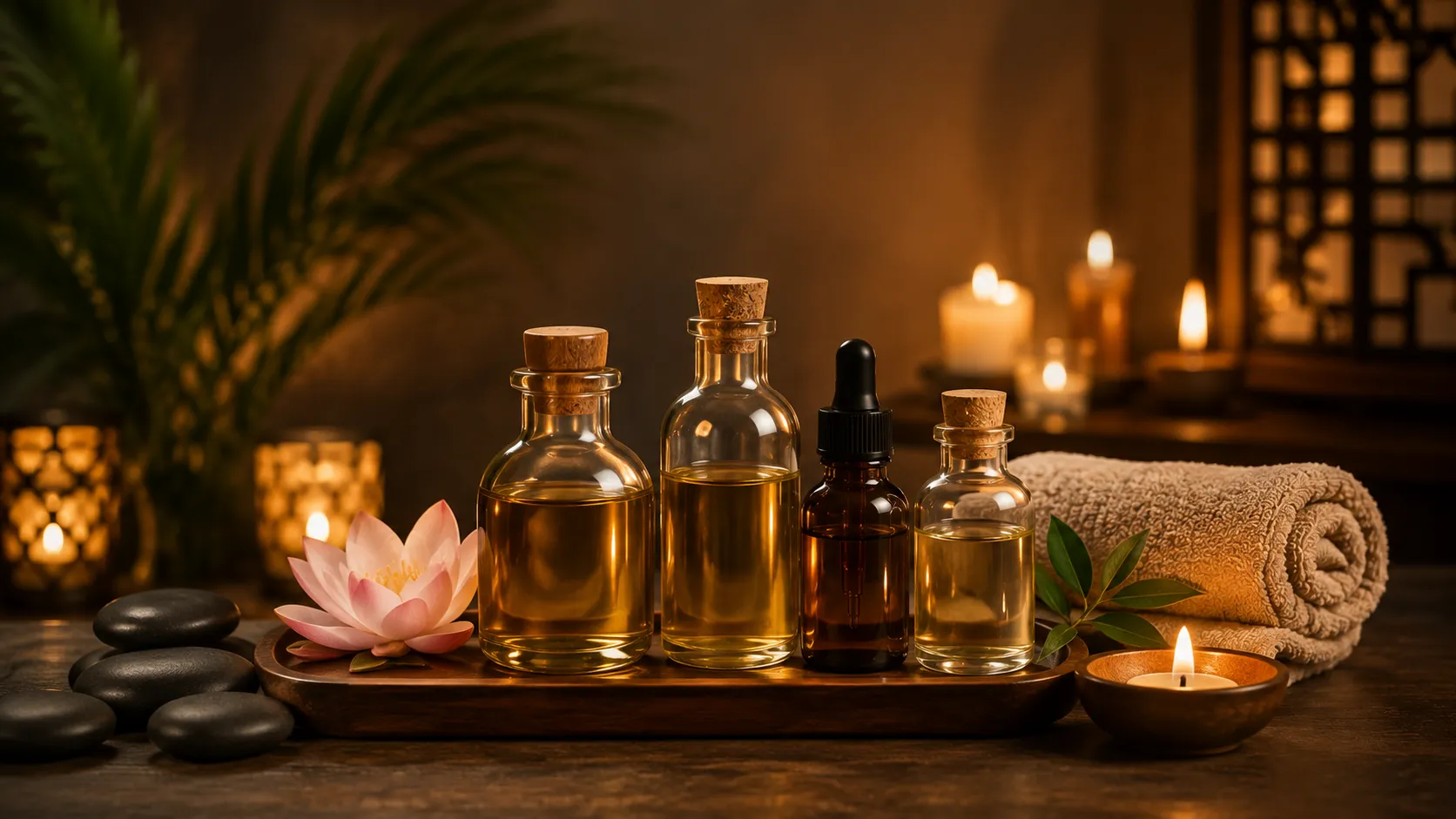
Massage oil can quietly shape the whole character of a tantric massage. It affects how smoothly the therapist can work, how often more product must be applied, whether the skin feels lightly conditioned or heavily coated, and how easy it is to dress afterwards. Scent also influences the room, although a fragrance that one person finds calming may be distracting or uncomfortable for another.
There is no single oil that is best for every client or every appointment. Sweet almond oil offers lasting glide, grapeseed oil feels lighter, fractionated coconut oil is smooth and relatively neutral, jojoba leaves a polished skin feel, sunflower oil is an accessible fragrance-light option, and sesame oil has a richer texture and aroma. The sensible choice is the one that fits the client, the method and the setting.
For adults exploring adult wellness in London, oil selection is not a decorative extra. It belongs in the consultation alongside comfort, allergies, fragrance preferences, boundaries and practical expectations. A professional should be able to identify the product being used, explain why it suits the planned session and offer an alternative when necessary.
Why the massage medium matters
Oil creates slip between hands and skin, but “more slip” is not always better. A very light oil may absorb quickly and require repeated application. A dense oil may support slow, continuous movements but leave more residue. The therapist therefore needs enough glide to maintain an even pace without making the surface excessively slippery.
The medium can also affect how present a client feels. If the fragrance is overwhelming, the oil feels cold, or the skin begins to itch, attention shifts from the experience to discomfort. A suitable product should recede into the background. It supports the session without becoming the main event.
Oil choice usually affects six practical factors:
- Glide: how easily the therapist can maintain continuous movement.
- Absorption: how quickly the product sinks in or needs replenishing.
- Skin feel: whether the finish is light, silky, rich or noticeably oily.
- Scent: whether the product is neutral, naturally aromatic or fragranced.
- Clean-up: how readily it comes off the skin and out of towels or clothing.
- Suitability: whether the ingredients align with known allergies, sensitivities and the product’s intended use.
Start with the carrier oil
A carrier oil forms the main body of a massage product. It may be used on its own or as the base for a professionally formulated blend. Understanding the carrier is more useful than being persuaded by an exotic product name, because it tells the client far more about likely glide, weight, scent and residue.
Sweet almond oil: enduring glide with a fuller finish
Sweet almond oil is popular because it spreads easily and tends to maintain workable glide for a reasonable time. Its texture is generally richer than grapeseed oil but less dense than many kitchen oils. That balance can suit slower massage styles in which frequent pauses to add product would interrupt the rhythm.
It often has a mild aroma, although deodorised versions may smell almost neutral. The finish can feel nourishing to some clients and too oily to others, so controlled dispensing matters. Anyone with a nut allergy, previous reaction to almond cosmetics or uncertainty should tell the provider. Review the actual label and choose a suitable alternative rather than guessing about tolerance.
Grapeseed oil: light texture and easier layering
Grapeseed oil has a thinner, lighter character. It spreads quickly and can leave less of a heavy coating than richer carriers. This may appeal to clients who dislike a pronounced oily finish or who need to dress soon after an appointment.
It may absorb or move sooner, so the therapist may use small additional amounts during an extended session. Careful layering is preferable to flooding the skin at the beginning. Its unobtrusive natural scent can also help when fragrance is a concern, but “light” does not mean reaction-proof. Check for perfume, preservatives or botanical extracts in the complete ingredient list.
Fractionated coconut oil: smooth, neutral and long-lasting
Fractionated coconut oil is processed so that it remains liquid at normal room temperatures. It usually feels lighter than solid coconut oil and offers consistent glide without a strong coconut aroma. These qualities make it practical for providers who want a predictable, relatively neutral medium.
Some clients enjoy its smooth finish, while others find that it remains on the skin longer than expected. A small initial amount helps the therapist judge the response before adding more. “Coconut” does not make every formulation pure or automatically gentle. Fragrance, stabilisers and the stated area of use still need checking.
Jojoba: a polished feel with controlled slip
Jojoba is technically a liquid wax rather than a conventional vegetable oil. In practical terms, it provides a smooth, polished feel and tends not to create the same heavy sensation as some richer carriers. It is often used alone in small quantities or included in blends to improve their finish.
Because pure jojoba can be relatively expensive, a product may contain it as one part of a blend. That is reasonable when the formulation is transparent. Its controlled slip can suit precise work but may be insufficient for long gliding movements, so the therapist’s technique and intended pace should guide the decision.
Sunflower oil: simple, light and often understated
Sunflower oil is a practical carrier with a generally light texture and subtle natural smell. A professionally produced cosmetic-grade version can provide comfortable glide without turning fragrance into the dominant feature of the room. This can make it a useful alternative when nut-derived oils are being avoided, subject to the client checking all ingredients.
Its familiarity should not encourage the use of an unlabelled kitchen bottle in a professional setting. Products used by professionals on members of the public fall within UK cosmetic safety expectations. Government guidance for cosmetic products in Great Britain covers safety assessment, ingredient information, clear labelling and evidence for product claims.
Sesame oil: rich texture and a distinctive identity
Sesame oil has a fuller texture and a more recognisable natural aroma than neutral carriers. It may suit a deliberately slow, grounded style when the client likes a richer finish and has no relevant sensitivity. Its weight can reduce the need for frequent reapplication, although too much may make the skin and linens feel heavily coated.
Traditional associations should not replace an honest description: sesame oil provides lubrication, influences skin feel and contributes scent. It is not a medical treatment or a guaranteed way to change health. Sesame is also a recognised food allergen, so consultation should address known allergies rather than waiting for the client to raise them spontaneously.
Unscented oil, natural aroma or fragranced blend?
Scent has a strong effect on atmosphere, yet it is one of the most personal parts of oil selection. A faint botanical note may complement a quiet room. The same scent may give another person a headache, remind them of an unpleasant place or simply feel too intrusive. Fragrance should therefore be an opt-in preference, not a surprise.
Unscented options keep the environment flexible
An unscented or fragrance-free carrier is often the safest starting point for first-time clients, hotel guests and anyone unsure about aroma. It allows the room’s cleanliness, ventilation, music and temperature to create the ambience. It also avoids a scented product competing with perfume, laundry products or hotel air fresheners.
“Unscented” and “fragrance-free” are not always interchangeable marketing terms. Some unscented products use ingredients that mask an underlying smell. Checking the ingredient list is more dependable than relying only on the front label.
Essential oils need restraint and informed agreement
Essential oils are highly concentrated aromatic materials. They should not be added casually or applied neat as though they were ordinary carrier oils. For a professional appointment, the better approach is a properly formulated product with known ingredients and a clear intended use.
Fragrances and cosmetic ingredients can cause allergic contact dermatitis in some people. The British Association of Dermatologists identifies fragrances and personal-care products among common causes, while published case reports have documented occupational allergic contact dermatitis associated with essential oils. These sources do not mean everyone will react. They support the more measured practice of disclosure, appropriate formulation and avoiding a known trigger.
No blend should be sold through medical or physiological promises. A fragrance can influence personal enjoyment, but preference is not a medical outcome.
A practical comparison of common choices
The table below is a starting point for discussion, not a substitute for checking the actual product. Brand formulation and added ingredients can change texture, scent and suitability.
| Oil or base | Typical feel | Glide pattern | Natural aroma | Practical consideration |
|---|---|---|---|---|
| Sweet almond | Medium to rich | Long-lasting | Mild | Discuss nut allergies and fabric residue |
| Grapeseed | Light | Fast-spreading, may need topping up | Low | Useful when a lighter finish is preferred |
| Fractionated coconut | Silky and light-medium | Consistent and lasting | Usually low | Check the complete formulation and intended use |
| Jojoba | Smooth, polished | Controlled rather than very slippery | Low | Often appears as part of a blend |
| Sunflower | Light to medium | Easy, adaptable slip | Subtle | Choose labelled cosmetic-grade products |
| Sesame | Rich | Lasting | Distinctive | Discuss sesame allergy and scent preference |
| Fragrance-free blend | Depends on carrier | Designed for consistent work | Minimal | Confirm whether it is genuinely fragrance-free |
The “best” row will differ from one client to another. Someone who wants minimal residue may lean towards grapeseed. Someone who values long glide may prefer almond or fractionated coconut. A fragrance-sensitive client may care more about a short ingredient list than about the plant source.
How oil choice fits a tantric massage
Oil does not make a massage tantric by itself. The wider character comes from the agreed format, pace, attention, setting and boundaries. The product supports those elements by allowing movements to remain deliberate and consistent without unnecessary interruption.
During Tantric Massage in London, a therapist may need a medium that keeps a steady glide across a longer appointment while still allowing changes in pace. That makes controlled application important. Starting with too much oil can reduce precision, create unnecessary mess and make the client feel coated rather than comfortable.
Warmth is another part of the experience. Oil may be gently warmed in appropriate equipment, but it should never feel hot. The therapist should test the temperature before broad application and ask the client how it feels. Comfort can change during a session, so permission at the start is not a replacement for ongoing communication.
Oil should also remain within the agreed scope of the appointment. Product suitability can depend on where it will be used, and the label’s directions must be respected. If any material compatibility is relevant, ask before the session. For example, NHS sexual-health guidance warns that oil-based body products can damage latex condoms. A massage oil should never be assumed to double as a compatible personal lubricant.
What a professional consultation should cover
A short oil conversation can prevent most avoidable problems. It need not feel clinical or awkward. The therapist simply needs enough information to choose responsibly, while the client needs a clear opportunity to ask questions and decline an ingredient.
Useful points to cover include:
- Known allergies: Include nuts, sesame, fragrances and previous reactions to cosmetics.
- Current skin condition: Mention broken skin, active irritation, sunburn, a rash or a recent reaction. The sensible response may be to avoid the affected area or rearrange the appointment.
- Scent preference: Choose fragrance-free, lightly scented or a specific agreed aroma.
- Finish preference: Explain whether a light, quick-clean finish or longer glide matters more.
- Product identity: Ask to see the label or obtain the ingredient list before arrival if sensitivity is a concern.
- Intended use: Confirm that the product is suitable for the agreed massage format and areas of application.
- Removal: Ask whether shower facilities are available or whether warm towels will be provided.
A small informal dab immediately before a full session is not the same as clinical patch testing and cannot rule out allergy. Medical patch testing is a specialist investigation used to identify contact allergens. Anyone with a history of significant reactions should seek appropriate clinical advice rather than relying on an improvised studio test.
Hygiene and handling are as important as ingredients
Even an excellent oil can be managed poorly. Clean handling protects the product, the client and the treatment space. Oil should be dispensed without repeatedly touching a bottle opening, and any container used for warming or decanting should be clean, suitable and identifiable.
Professional practice should include:
- clean hands immediately before the appointment;
- fresh towels and linen for each client;
- a cleaned treatment surface;
- pumps, bottles or single-session containers that reduce contamination;
- no return of unused decanted oil to the main container;
- correct storage away from excess heat and direct light;
- attention to the product’s opening date, shelf life and changes in smell or appearance;
- prompt, appropriate laundering of oil-marked textiles.
For an outcall appointment, transport adds another variable. Bottles should be sealed securely and kept separate from clean linen. The therapist should bring enough product for the agreed service, but a giant anonymous bottle is not reassuring. Clear labelling and tidy organisation communicate far more professionalism.
Choosing a London provider without relying on labels
Oil choice is one detail within a larger decision. Privacy, communication, hygiene, location, therapist information and transparent booking terms matter at least as much. A polished description of a botanical blend cannot compensate for unclear boundaries or evasive answers.
Even when a venue is introduced as the most popular Tantric Massage parlour in London, clients should still ask which oil is used, whether an unscented alternative is available and how known sensitivities are recorded. Popularity language does not answer those practical questions.
Likewise, the best tantric studio in London for a particular client will be the one that can explain its products, respect a refusal, maintain clean handling and match the session to agreed preferences. The most useful pre-booking message is specific: “I avoid almond and added fragrance. Which labelled oil can you offer instead?”
The current Tantric Massage London website provides separate routes for services and therapist discovery, while its contact page gives clients a direct way to raise product questions. Availability and product stock can change, so confirm the oil, therapist, setting, duration and complete price before travelling.
The connection with yogic practice
Tantra Yoga and massage are separate practices, even though both may use ideas such as attention, breathing and an unhurried pace. Yoga does not require massage oil, and an oil does not create spiritual depth. Treating the two as interchangeable can lead to confused expectations.
Common oil-selection mistakes
Many disappointing choices come from treating one attractive quality as the whole decision. The following mistakes are easy to avoid once the client and provider discuss the product plainly.
Five errors are especially common:
- choosing by fragrance without considering glide, allergens or the finish after an hour;
- assuming that a plant-derived or “natural” ingredient cannot cause a reaction;
- applying too much at the beginning instead of building the amount gradually;
- overlooking showers, formal clothing, hotel linen and the journey home;
- accepting an unlabelled mixture whose ingredients and intended use cannot be confirmed.
The remedy is simple: identify the carrier, review the full formulation, agree on fragrance and start with a controlled amount. If the product remains a mystery, request a sealed, labelled alternative.
Frequently asked questions
These concise answers cover the questions that matter most before choosing an oil or booking a professional appointment.
Which massage oil is best for tantric massage?
There is no universal best oil. Sweet almond and fractionated coconut oils often offer lasting glide, while grapeseed and sunflower oils can feel lighter. Jojoba gives a polished, controlled finish. The right choice depends on the planned technique, session length, allergies, scent tolerance, desired finish and product formulation.
Is sweet almond oil suitable for everyone?
No product is suitable for everyone. Anyone with a nut allergy, previous cosmetic reaction or uncertainty should disclose it before the appointment and review the actual ingredients. A provider should be able to offer or discuss an alternative rather than guessing about tolerance.
Are essential oils necessary?
No. A fragrance-free carrier can provide all the glide a massage requires. Essential oils add aroma, not legitimacy. If they are used, they should be part of a properly formulated product, disclosed in advance and acceptable to the client.
Can I bring my own massage oil?
You can ask, particularly if you have a known sensitivity or a product already recommended for your skin. The therapist may need to check its ingredients, intended use, texture and packaging before agreeing, because the medium must also be workable and hygienically handled.
What if my skin starts itching during the appointment?
Say so immediately and ask for the product to be removed. The session should pause rather than continue through discomfort. Seek medical advice if a reaction is severe, spreading, persistent or accompanied by other worrying symptoms.
Choose the oil as carefully as the appointment
The right massage oil is not necessarily the rarest, most fragrant or most expensive. It is a clearly labelled product that gives the required glide, suits the client’s known needs, supports the agreed method and can be handled cleanly in the chosen setting.
Sweet almond, grapeseed, fractionated coconut, jojoba, sunflower and sesame oils each bring a different balance of slip, absorption, aroma and finish. Those differences become useful only when they are discussed openly. Consultation turns oil selection from guesswork into a practical part of consent and comfort.
To discuss a suitable service, therapist and product preference, visit Tantric Massage London and confirm the current appointment details directly before booking.











Leave a Reply